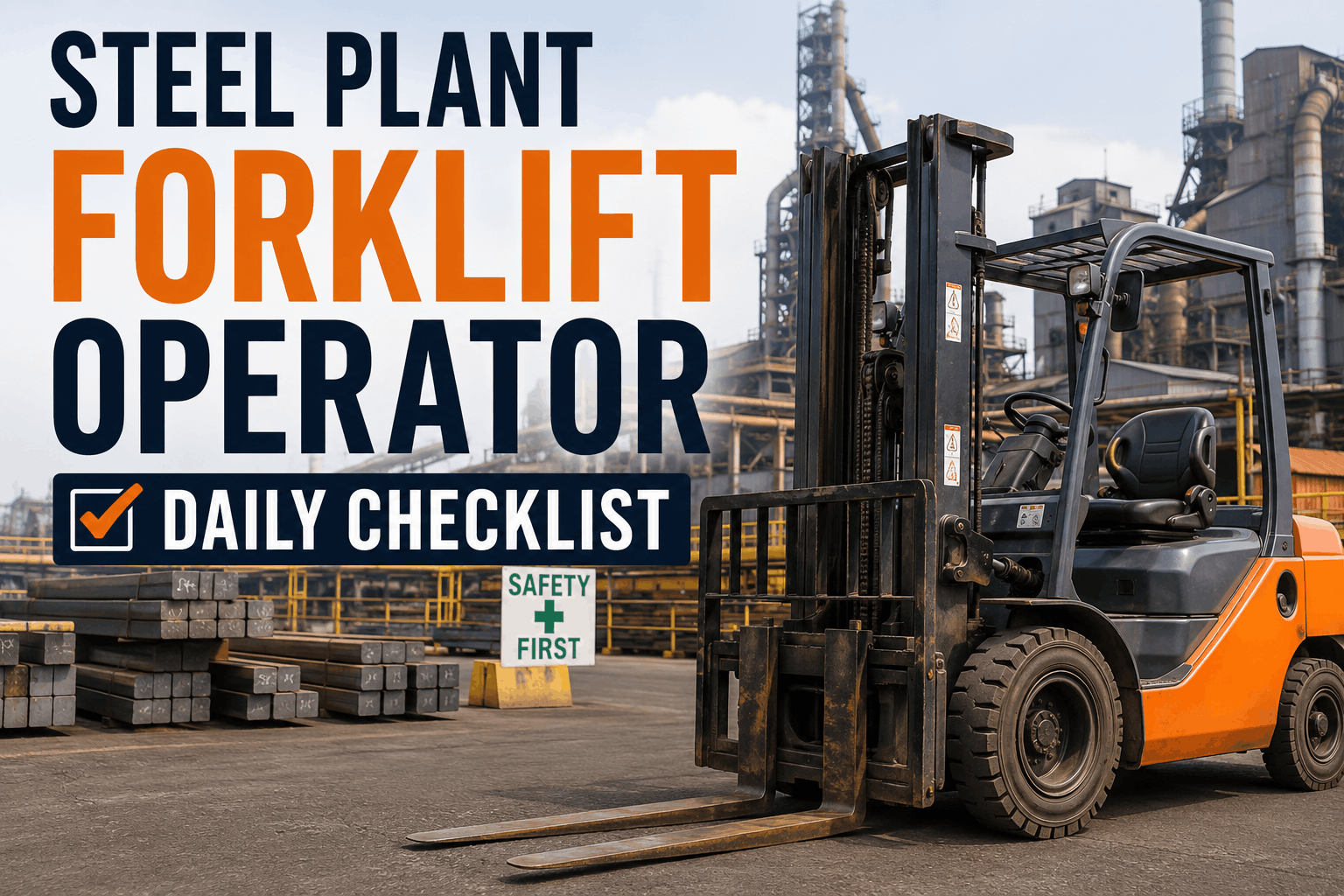
Forklift operators in USA general industry must conduct thorough pre-shift safety inspections daily before placing equipment in service per OSHA 29 CFR 1910.178(q)(7). Defective forklifts immediately removed from service prevent equipment failure-related accidents, pedestrian injuries, and load drops. Powered industrial trucks account for roughly 11% of all workplace accidents and cause approximately 85 deaths and 34,900 serious injuries annually across USA warehouses, distribution centers, and manufacturing facilities. Mechanical failures—brake system degradation, steering malfunction, tire blowouts, hydraulic leaks, and defective warning devices—cause the majority of forklift incidents. A structured daily pre-shift inspection checklist backed by digital work order management ensures operators systematically check critical safety systems before shift operations commence, documentation is captured in real-time preventing falsified inspection records, defects are immediately escalated to maintenance, and defective equipment is tagged out preventing unauthorized operation. OSHA inspections cite forklift violations more frequently than any other powered industrial truck standard; operators lacking documented daily inspection records face significant OSHA penalties. Oxmaint's forklift daily checklist system automates pre-shift inspection scheduling, guides operator through every safety item, captures digital signatures proving inspection completion, automatically flags defects for maintenance work orders, and retains audit-ready records demonstrating OSHA compliance during inspection.
Automate Forklift Daily Safety Inspections with OSHA 1910.178 Compliance in OxmaintDigital pre-shift checklists, automatic defect escalation, digital sign-offs, maintenance work order integration, and compliance records—ensuring safe forklift operations daily.
OSHA 1910.178(q)(7) mandates examination of every forklift before being placed in service each shift. Documentation of inspection—operator name, date, time, equipment ID, defects found—provides compliance evidence and helps identify problem equipment requiring targeted maintenance or retirement. Operators must be trained and certified per 1910.178(l) to perform inspections and authorized to remove unsafe equipment from service.
2. Mast, Forks, & Lifting Mechanism Inspection
The mast, forks, and lifting hydraulic system create lifting force and position loads. Cracked forks, bent mast, hydraulic leaks, and sticking cylinders cause load drops, tipping, and operator injuries. Daily visual inspection identifies imminent failures before catastrophic occurrence.
3. Brake System, Steering, & Tire Inspection
Brake failure causes collision and injury. Steering problems prevent operator control. Tire damage allows blowouts during operation. These three systems require daily verification to prevent catastrophic incidents.
4. Lighting, Warning Systems, & Safety Devices
Warning lights and audible alarms alert pedestrians and other equipment operators to forklift movement. Backup alarm, headlights, and brake lights are required equipment; defective units create hit-and-run or blind-spot collision risks. Daily verification ensures visibility and warning systems function before operation commences.
5. Defect Documentation & Maintenance Escalation
Any defect found during pre-shift inspection must be immediately reported, documented, and equipment removed from service. Operator cannot override defective equipment—doing so violates OSHA requirement and creates accident liability. Digital work order escalation ensures maintenance acts quickly and equipment returns to service when repaired.
Eliminate Forklift Safety Risks with Daily OSHA-Compliant Inspections in OxmaintDigital checklists, real-time defect escalation, automatic tag-out, maintenance integration, and audit-ready compliance documentation.
"Before Oxmaint, forklift inspections were on paper clipboards that got lost, operators skipped items checking boxes without actually inspecting, and defects were reported verbally then forgotten. When OSHA conducted surprise inspection, we couldn't find inspection records for three of our trucks—major violation. After implementing Oxmaint, every operator completes digital checklist on tablet before shift, each checkbox requires photo/comment, defects auto-generate maintenance work orders, and records are permanently stored with timestamps. Our next inspection zero violations—OSHA praised our digital compliance system as model for industry. Equipment downtime from undetected defects dropped 60% because maintenance sees defect reports immediately instead of days later."
— Patricia Gonzalez, Operations Manager, National Distribution Centers, USA
1. What is the OSHA requirement for daily forklift inspections per 29 CFR 1910.178?
OSHA 1910.178(q)(7) requires all forklifts be examined before being placed in service each shift. For 24/7 operations, examinations required after each shift (not daily but each shift). Inspections must identify defects and remove defective equipment from service preventing unsafe operation. Documentation of inspection required identifying equipment, inspector, date, defects found, and corrective action.
2. Who is authorized to perform daily forklift inspections under OSHA standards?
Only operators who have completed OSHA-compliant training per 1910.178(l) including inspection procedures, equipment operation, and workplace hazards are authorized to perform inspections. Operators must be evaluated demonstrating competency. Refresher training required at least every three years or when operator observed operating unsafely or assigned different truck type.
3. What should happen if a forklift fails pre-shift inspection and defects are found?
Equipment must be immediately removed from service and tagged "DO NOT OPERATE." Operator cannot override safety procedures or attempt operation. Maintenance must repair defects and verify repairs before tag removed and equipment returned to service. Defect documentation and repair records maintained for compliance demonstration during OSHA inspection.
4. What are the most common forklift defects that require equipment removal from service?
Safety-critical defects removing equipment immediately: brake failure (insufficient stopping power), steering malfunction (unresponsive or binding), load drop hazard (cracked forks, failing hydraulics), worn tires creating blowout risk, non-functional warning devices (horn/backup alarm), and hydraulic leaks indicating system failure. Other defects (light replacement, minor damage) may allow limited operation until repair scheduled.
5. How long must daily forklift inspection records be retained for OSHA compliance?
OSHA does not specify retention period but guidance recommends minimum one year. Best practice is three years to support trend analysis and demonstrate compliance consistency during audits. Digital records systems provide searchable archives instantly available for inspector review on demand without paper document retrieval delays.
6. What is the significance of the load capacity plate on a forklift in daily operations?
Load capacity plate specifies rated load capacity at specific load center distance (typically 24 inches for forks). Exceeding rated capacity causes tipping and load drop. Operators must verify plate legible and understand load limits for each truck. Illegible or missing capacity plate prevents safe load determination—equipment must be repaired before operation resumes.
7. Are forklift brake lights and backup alarms mandatory safety equipment under OSHA standards?
Yes. OSHA 1910.178(g) requires all powered industrial trucks have reliable warning devices: horn, backup alarm, and lighting suitable for operating conditions. Non-functional warning devices create pedestrian hit risk and are cited violations during OSHA inspection. Trucks with defective alarms must be repaired or removed from service immediately.
8. Can digital pre-shift inspection checklists replace paper inspection logs for OSHA compliance?
Yes, OSHA accepts digital records with operator ID, timestamp, equipment identifier, and inspection results as compliant documentation. Digital platforms provide superior compliance evidence—timestamped entries prevent falsification, automatic escalation ensures defects reach maintenance, and searchable archives support instant OSHA inspection access. Paper records subject to loss or deliberate manipulation; digital records create audit-proof trail.