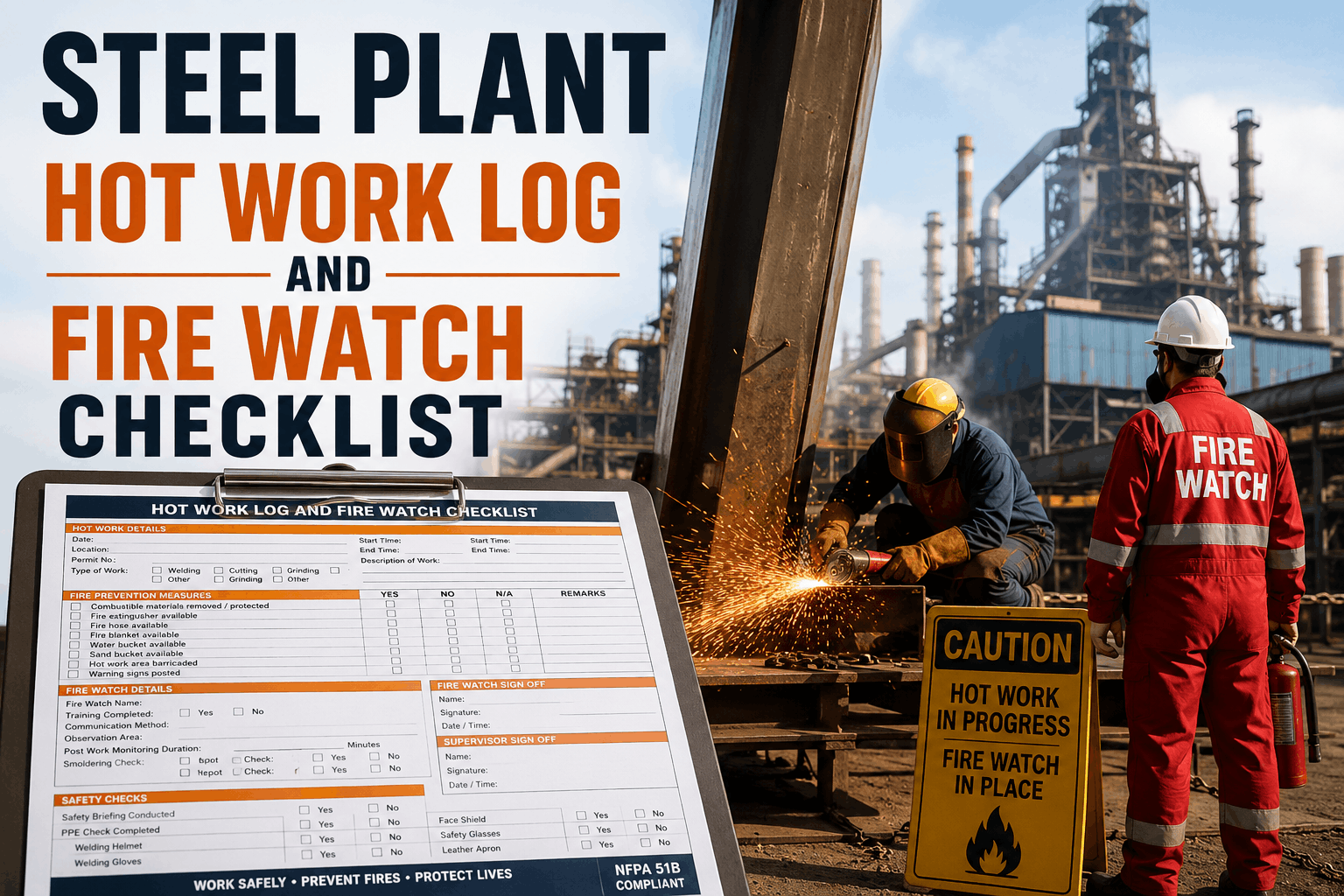
Hot work operations—welding, cutting, grinding, torch-applied roofing, and thermal processes—generate sustained flames, sparks, and molten metal that readily ignite combustible materials within 35 feet of the work zone. NFPA 51B, Standard for Fire Prevention During Welding, Cutting, and Other Hot Work, mandates comprehensive fire watch protocols, issued hot work permits, trained fire watch personnel stationed on-site, and minimum 1-hour post-operation fire monitoring to detect and suppress smoldering fires before catastrophic spread. Steel plants, refineries, petrochemical facilities, power generation plants, and construction sites manage multiple hot work operations daily—creating fire risk accumulation if permits are issued without attendant confirmation, combustibles are not cleared the mandatory 35 feet, or fire watch personnel are untrained or distracted. OSHA references NFPA 51B compliance in 29 CFR 1910 Subpart Q, making adherence legally mandated for general industry. A structured digital hot work permit system integrated with real-time fire watch checklists, post-completion hotspot monitoring logs, and compliance documentation ensures every spark-generating operation is authorized, supervised by trained fire watch, and post-monitored to NFPA standards. Oxmaint's hot work management module centralizes permits, fire watch duty assignment, combustible clearance verification, and post-work monitoring records—eliminating the paper delays that allow unmonitored operations to commence and building audit-ready documentation that passes OSHA and AHJ (Authority Having Jurisdiction) inspections on first review.
Manage Hot Work Fire Safety with NFPA 51B Compliance in OxmaintDigital hot work permits, fire watch checklists, combustible clearance logs, post-work monitoring, and compliance tracking—all accessible from jobsite mobile devices.
NFPA 51B mandates written hot work permits issued by authorized personnel before any spark-generating work begins. Permit authorization confirms site conditions are safe, fire watch is assigned, combustibles are cleared or protected, fire extinguishing equipment is on site and functional, and responsible personnel have briefed all participants on hazards and procedures.
2. Fire Watch Duty Log & Real-Time Area Monitoring
Fire watch is a continuous, active responsibility—not periodic patrol or background monitoring. Fire watch personnel must maintain full visual and situational awareness of the entire 35-foot work zone throughout hot work operations and for full post-operation monitoring duration. Real-time observation logs document watchfulness and evidence a trained person was actively monitoring.
3. Hot Work Operation Safety & Spark Management
The hot work operator controls spark generation rate, direction, and intensity through technique, equipment settings, and protective measures. Hot work supervisor oversees entire operation ensuring combustible zone is continuously protected, fire watch is actively engaged, and extinguishing equipment remains accessible and functional. Operator-supervisor coordination prevents slips in procedure that allow ignition.
4. Post-Operation Fire Watch & Hotspot Monitoring
Smoldering fires ignite 10 minutes to hours after visible hot work stops. NFPA 51B 2019 edition requires minimum 1-hour continuous fire watch after hot work completion, plus optional additional up-to-3-hour fire monitoring period per Permit-Authorizing Individual judgment. This section is critical—most fires discovered after hot work operations occurred during post-work monitoring period when detection is possible.
5. Hot Work Permit Closure & Compliance Documentation Archive
Hot work permit closure confirms work scope is complete, fire watch duration fulfilled, no ignitions detected, and area is safe for normal operations. Complete permit documentation—fire watch logs, hotspot monitoring records, any incident reports, and equipment inspection results—forms the compliance record required for OSHA audit and fire marshal inspection.
Stay Compliant with NFPA 51B Hot Work Safety in OxmaintDigital permits, fire watch checklists, post-operation hotspot monitoring, and archive retention—all meeting NFPA 51B 2019 edition and OSHA requirements.
"Before Oxmaint, hot work permits were scattered across five different paper forms, fire watch logs were often blank or back-filled, and post-work monitoring was completely undocumented. OSHA inspector flagged us for inadequate fire watch records. After implementing Oxmaint's hot work module, every permit generates a digital audit trail, fire watch observation fields must be completed in real-time on mobile, and automatic 60-minute timers prevent early permit closure. Subsequent inspection showed zero violations and our fire marshal actually used us as an example facility for other contractors."
— Sarah Chen, Safety Director, Midwest Fabrication LLC, USA
Frequently Asked Questions — Hot Work Log & Fire Watch Checklist
1. What is the legal difference between NFPA 51B and OSHA requirements for hot work operations?
OSHA 29 CFR 1910 Subpart Q references NFPA 51B compliance as mandatory, making the standard legally binding. NFPA 51B provides the detailed technical guidance on fire watch duration, combustible clearance (35-foot rule), equipment requirements, and fire prevention procedures. OSHA inspectors cite noncompliance with NFPA 51B as direct OSHA violations.
2. How long must fire watch continue after hot work is complete under current NFPA 51B?
NFPA 51B 2019 edition requires minimum 60 minutes continuous fire watch after hot work completion to detect and suppress smoldering fires before catastrophic spread. The Permit-Authorizing Individual may extend fire watch up to additional 3 hours based on hazard assessment. This replaced the older 30-minute standard, doubling coverage for post-work ignition detection.
3. What is the 35-foot rule in NFPA 51B and how is compliance verified?
NFPA 51B mandates minimum 35-foot clearance radius around hot work—all combustible materials must be removed or covered with fire-resistant materials within 35 feet. Compliance is verified by visual walkdown: measure distance to nearest combustible, remove or cover as needed, and document clearance per permit. Gaps in floor, wall penetrations, and air ducts must be sealed to prevent spark migration into hidden spaces.
4. What makes someone a qualified fire watch person under NFPA 51B?
Fire watch must be trained in NFPA 51B hot work fire prevention, fire hazard recognition, portable fire extinguisher use, hand signal communication, and emergency response procedures. Fire watch cannot perform other duties—sole responsibility is monitoring the 35-foot zone continuously. Some facilities require formal fire watch certification; minimum is documented training attendance and competency verification before assignment.
5. Can multiple hot work operations occur simultaneously in the same general area under NFPA 51B?
NFPA 51B does not explicitly prohibit multiple simultaneous operations, but each operation must have its own issued permit, separate 35-foot clearance zone, and dedicated fire watch person. Fire watch cannot monitor two separate operations simultaneously—doing so violates the standard's requirement for continuous, uninterrupted observation. Careful site layout planning prevents operational conflict.
6. What should fire watch do if a small fire is detected during the post-work monitoring period?
Fire watch suppresses immediately using portable extinguisher or water. Notify facility manager and emergency services (911) of any fire detected. Document incident: location, detection time, fire size and appearance, suppression method, and suspected cause. Investigation identifies whether combustible clearance was inadequate, spark containment failed, or other system gap. Report to management for corrective action preventing recurrence.
7. How frequently must hot work permits be trained on per OSHA and NFPA standards?
OSHA and NFPA do not specify refresh training frequency, but best practice is annual refresher for hot work operators and fire watch personnel. Training should cover regulatory updates (NFPA 51B changes), site-specific procedures, incident case studies, and equipment familiarization. Documentation of training attendance and sign-off supports compliance audit and demonstrates competency maintenance.
8. How long should hot work permits and fire watch logs be retained for OSHA compliance?
OSHA does not specify retention period but OSHA inspection guidance recommends minimum 3 years. Best practice is 5+ years to support historical trend analysis and demonstrate program continuity during audits. Digital archive systems like Oxmaint provide searchable, tamper-proof retention with instant access during regulatory inspection.