Overhead and gantry cranes lift, position, and lower loads in manufacturing plants, steel mills, automotive facilities, and warehouses. Wire rope failure, hook deformation, brake system degradation, and limit switch malfunction cause catastrophic load drops killing operators and bystanders while destroying critical equipment. OSHA 29 CFR 1910.179 mandates frequent inspections (daily-monthly intervals) and periodic inspections (1-12 month intervals) to identify defects before failure. ASME B30.2, Standard for Overhead and Gantry Cranes, provides detailed technical specifications exceeding OSHA minimums and representing current best practice. Crane wire rope requires skilled visual inspection counting broken wires against rejection criteria; six broken wires in one rope lay or three broken wires in one strand triggers immediate rope replacement per ASME B30.5-2.4.2. Hook throat opening must be measured using gauge—deformation exceeding 15% of manufacturer specification indicates replacement needed to prevent load drop. A structured daily operator inspection checklist backed by digital equipment records, maintenance scheduling, and compliance documentation ensures every shift-critical defect is caught before loads are lifted. Oxmaint's crane management system centralizes daily inspection checklists, wire rope condition tracking with rejection criteria assessment, hook measurement documentation, brake testing results, limit switch verification, and periodic maintenance schedules—all accessible from the operator cab to confirm crane readiness before lifting operations begin. Digital inspection records provide OSHA audit trail preventing disputed violations and supporting safe operations culture across facilities.
OSHA 1910.179(j)(2) requires frequent inspection of operating mechanisms, bridges, trolleys, hoists, chain blocks, and wire reeving before placing equipment in service. Daily inspection is minimum standard for general industry cranes. Operators must be trained per 1910.179(d) identifying crane hazards and communicating defects to supervisors.
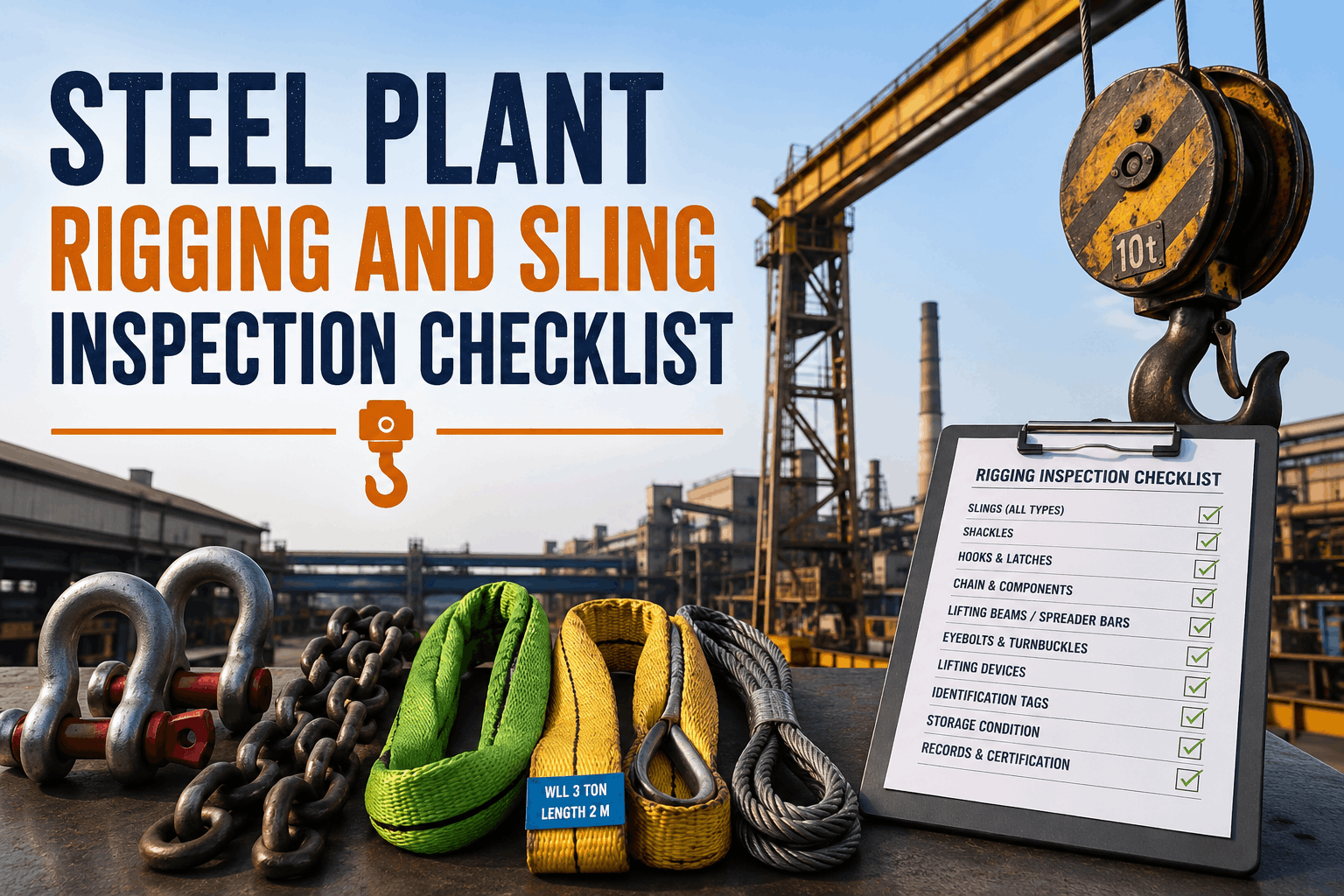
Wire rope is the critical load-bearing component; rope failure under load causes catastrophic drop. ASME B30.2 specifies precise rejection criteria based on broken wire count, rope diameter loss, corrosion, and kinking. Skilled visual inspection and documentation prevents rope failure during operation.
3. Hook Inspection & Load Attachment Verification
Hook deformation allows loads to slip or roll off during lifting. Safety latch must function freely preventing accidental load discharge. Hook throat opening must be measured to confirm deformation within acceptable limits. Periodic hook load testing required per ASME B30.2.
Brake system holds suspended loads—failure causes drop. Limit switches prevent over-travel and structural overstress. Electrical systems must be safe from shock and short circuit. Regular testing confirms these critical safety systems function before loads lifted.
Daily inspection results must be documented, defects escalated to maintenance immediately, and equipment removed from service if safety-critical defects found. Compliance documentation supports OSHA audit defense and demonstrates commitment to safe operations culture.
Eliminate Overhead Crane Risk with Daily ASME B30.2 Safety Compliance in OxmaintDigital daily checklists, wire rope assessment with rejection criteria, hook measurement tracking, brake testing, and compliance records preventing catastrophic load drops.
"Before Oxmaint, crane inspections were conducted informally—operators would run equipment briefly and make mental notes, documentation was sporadic, and rope condition assessments were guesswork. When a load dropped damaging $2M inventory, OSHA investigation revealed our inspection records were missing critical rope measurements and defect documentation. After implementing Oxmaint, every crane gets formal daily digital checklist with photo documentation of rope condition, hook measurements captured with digital caliper, brake test results timestamped, and all findings reviewed by maintenance supervisor same-shift. Subsequent OSHA inspection praised our digital compliance system—zero violations. Equipment downtime from missed maintenance issues improved 40% because problems identified and scheduled for repair before catastrophic failure."
— David Kowalski, Maintenance Manager, Industrial Manufacturing Corp, USA
1. What is the OSHA requirement for daily overhead crane inspections per 29 CFR 1910.179?
OSHA 1910.179(j)(2) requires frequent inspection of overhead cranes covering operating mechanisms, bridges, trolleys, hoists, and wire reeving. Frequent inspection typically means daily to monthly intervals for normal service conditions. Periodic inspection required 1–12 months depending on service severity. Daily inspection minimum standard for cranes operating regularly. Documentation of inspection findings required identifying defects and corrective actions.
2. What does ASME B30.2 specify about wire rope rejection criteria for overhead cranes?
ASME B30.2-3.20.2 specifies rope replacement if: six randomly distributed broken wires in one rope lay OR three broken wires in one strand in one rope lay OR rope diameter reduced more than 5% from original. One rope lay is distance for one complete spiral. Broken wires at rope end or clustered indicate imminent failure—rope must be replaced immediately to prevent load drop.
3. How is hook throat opening measurement related to hook replacement criteria?
Hook throat opening (distance between hook cheeks at narrowest point) increases as hook experiences load stress and deformation. ASME B30.2 specifies hook replacement if throat opening deformation exceeds 15% of manufacturer specification. Measurement performed using vernier caliper or hook gauge tool. Deformed hooks cannot safely hold loads and risk load slippage during lifting.
4. What safety systems must be tested daily on overhead cranes before lifting loads?
Critical daily tests: hoist brake holding suspended light load (no drift for 30 seconds), emergency stop button (all motion halts within 1–2 seconds), upper hoist limit switch (automatic stop preventing rigging contact with trolley block), bridge limit switches (prevents over-travel beyond runway), pendant controls (all buttons respond), and load limit (prevents structural overstress). Any failed test removes equipment from service pending repair.
5. Who is qualified to perform overhead crane daily inspections under OSHA and ASME standards?
Operator or competent person (person capable of identifying existing and predictable hazards) who has completed OSHA training per 1910.179(d) covering crane hazards, operation, and inspection procedures. Competent person must understand rejection criteria for rope, hooks, and mechanical components to make accurate safety assessments. Qualified person (engineer-level expertise) required for periodic detailed inspections and problem diagnosis beyond daily operator checks.
6. What should be done if a safety-critical defect is found during daily crane inspection?
Equipment must be immediately removed from service and tagged "DO NOT OPERATE." Operator cannot override safety procedures. Supervisor notified and maintenance work order created for immediate repair. Crane remains out-of-service until defect repaired, tested by maintenance, and equipment cleared by supervisor or maintenance manager. Documentation of repair and testing required before tag removed authorizing operations resumption.
7. How often should overhead cranes undergo periodic detailed inspection beyond daily operator checks?
OSHA 1910.179(j)(3) requires periodic inspection at 1–12 month intervals depending on service severity. Cranes in continuous heavy service inspected annually minimum; light-duty cranes inspected annually to biannually per manufacturer recommendation and facility risk assessment. Periodic inspection includes load testing per manufacturer specification, detailed structural evaluation, electrical system testing, and component replacement planning. Maintenance records documented and retained.
8. How long must daily crane inspection records be retained for OSHA compliance?
OSHA does not specify retention period but guidance recommends minimum one year. Best practice is three years to support trend analysis and demonstrate compliance consistency during audits. Digital records provide searchable archive instantly available for inspector review without paper document retrieval delays. Digital documentation also prevents record loss or tampering providing superior compliance evidence.