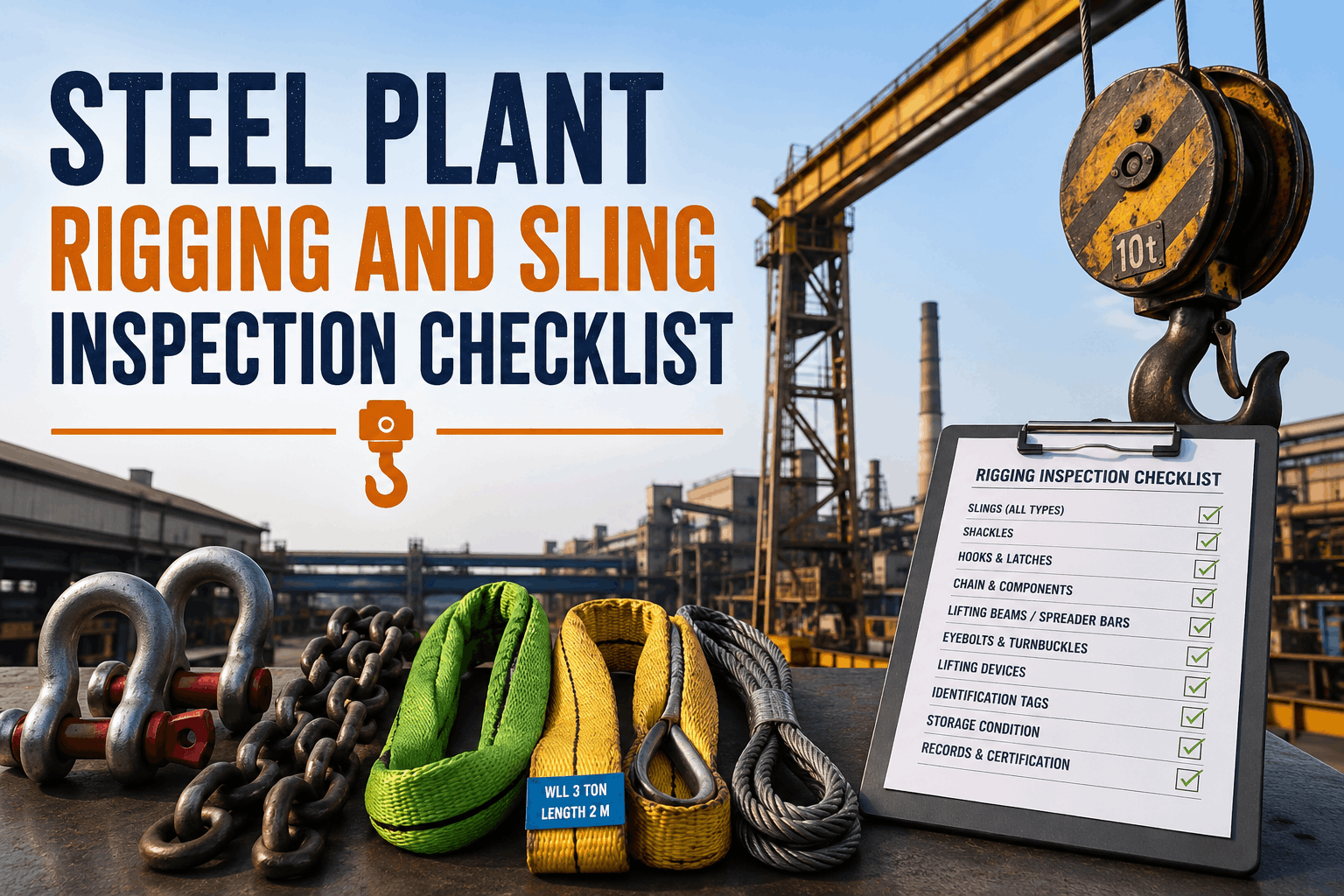
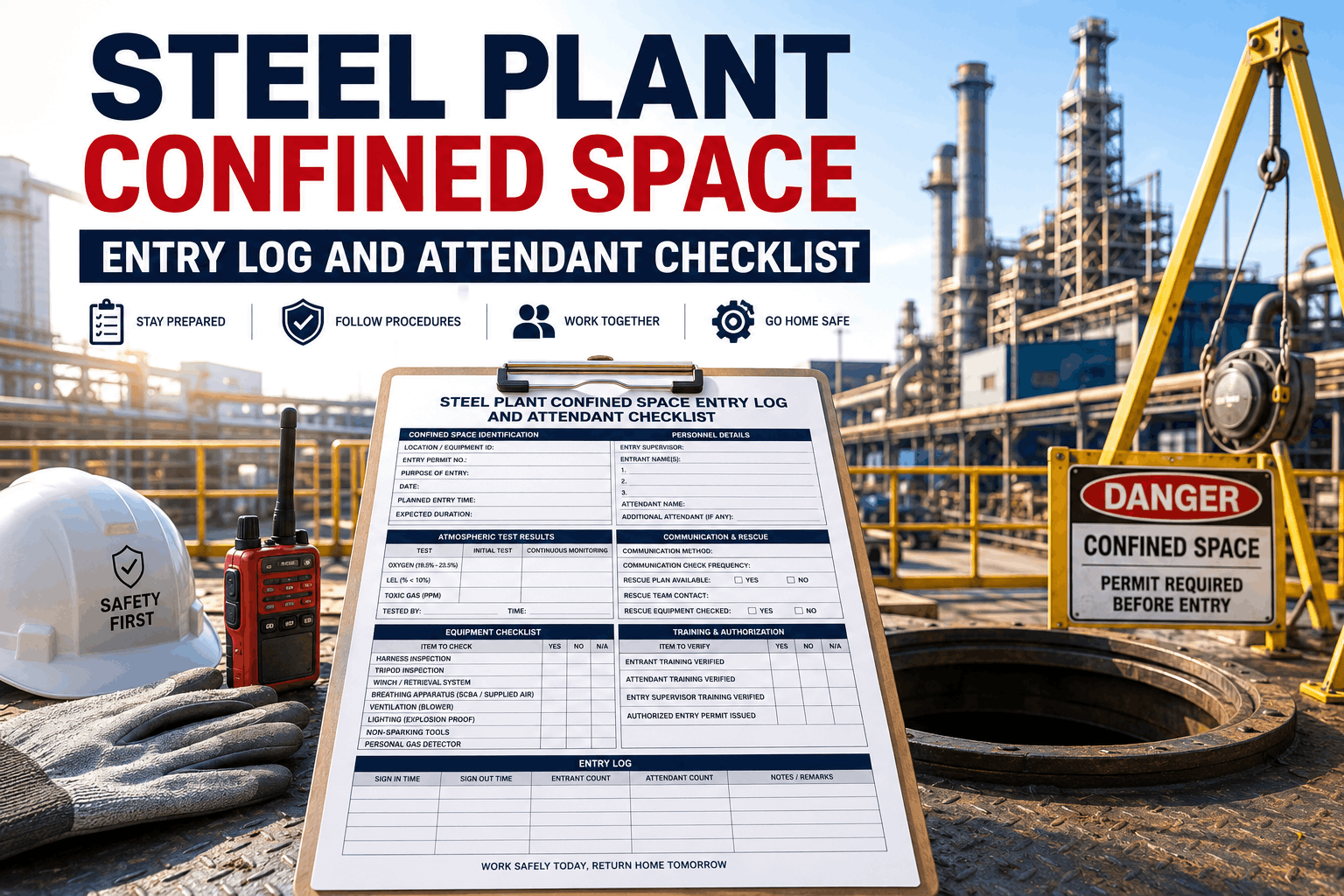
Steel Plant Rigging and Sling Inspection Checklist
By Alex Jordan on June 9, 2026
Rigging and sling failures cause catastrophic injuries in steel plants—dropped loads, struck-by incidents, and equipment damage. OSHA 29 CFR 1910.184 mandates pre-use inspections for all slings, shackles, and lifting beams before each use. Wire rope slings fail from broken wires, corrosion, and kinking. Synthetic slings degrade from cuts, abrasion, heat, and chemical exposure. Chain slings stretch, crack, and wear at link bearing points. Missing or illegible capacity tags alone cause thousands of citations annually. A structured digital rigging inspection system with photographic documentation and discard criteria ensures every lift is safe, every operator is accountable, and every inspection record is audit-ready. Oxmaint's rigging inspection module centralizes sling inventories, schedules pre-use inspections, logs discard events, and maintains certification records—eliminating paper logs, preventing damaged slings from remaining in service, and building OSHA-compliant documentation that proves due diligence. Start free trial or book a demo to see how Oxmaint digitizes rigging safety.
Steel Plant Rigging and Sling Inspection — OSHA 1910.184 Compliant ChecklistDigital pre-use inspection checklists, sling inventory tracking, discard criteria logging, certification records, and photo documentation—all in one platform for rigging safety and compliance.
Wire rope slings are the most common rigging in steel plants but fail catastrophically when damaged. Broken wires, corrosion, birdcaging, kinking, and crushing reduce capacity and create sudden failure points. Pre-use inspection must identify these defects before every lift.
Synthetic slings (nylon, polyester, polypropylene) are lightweight but vulnerable to cuts, abrasion, chemical attack, and UV degradation. Unlike wire rope, synthetic slings fail suddenly without warning signs. Inspect before each lift and remove from service at first sign of damage.
3. Chain Sling Inspection — Link Wear, Stretch & Cracks
Alloy steel chain slings have high strength but fail when chain links wear beyond 10% of original diameter, elongate from overload, or develop cracks. Pre-use inspection measures link wear, detects cracks, and verifies attachment hardware integrity. OSHA mandates chain sling inspection tags with discard criteria.
4. Shackle, Lifting Beam & Fitting Inspection
Shackles, lifting beams, spreader bars, eye bolts, and master links attach slings to loads. These fittings fail from wear, distortion, cracking, and thread damage. Pre-use inspection checks each component before attachment, verifying capacity markings and load path integrity.
5. Rigging Storage, Color Coding & Certification Records
Proper rigging storage prevents damage between uses. Color coding identifies capacity and sling type. Certification records prove periodic inspections—required by OSHA for chain slings and synthetic slings in severe service conditions. Digital records provide audit-ready documentation.
Digitize Rigging & Sling Inspection ComplianceDigital pre-use checklists, sling inventory tracking, discard logging, and OSHA-ready certification records—all accessible from mobile at the lifting site.
"Before Oxmaint, our rigging inspection was a clipboard-and-paper process—logs were incomplete, damaged slings sometimes stayed in circulation, and finding an inspection record for audit took hours. After digitizing with Oxmaint, every sling has a QR code linking to its inspection history. Pre-use checklists are completed on mobile with photo evidence. When a sling fails, we log discard with photo and cut the tag. Our OSHA inspector reviewed our rigging program during the last audit and noted the digital system as a best practice. Zero citations. The system paid for itself by preventing just one rigging incident."
— David Reynolds, Crane & Rigging Supervisor, Midwest Steel Fabrication, USA
1. How often must slings be inspected under OSHA 1910.184?
OSHA 1910.184(d) requires pre-use inspection before each use by the operator. Periodic inspection (documented) required at intervals defined by sling type and service severity—chain slings annual minimum, synthetic slings quarterly in severe service, wire rope slings per usage and exposure but at least annually. Oxmaint auto-schedules periodic inspections and sends alerts when due.
2. What is the discard criteria for wire rope slings regarding broken wires?
Discard running wire rope slings when 6 broken wires in one lay (full strand revolution) or 3 broken wires in one strand in one lay. For standing ropes, discard at 2 broken wires in one lay. Broken wires at end fittings near thimble or socket are especially critical. Document count location for discard decision.
3. How much chain link wear is allowed before discarding alloy chain slings?
Discard when chain link diameter at point of greatest wear is reduced by more than 10% of original diameter. For 10mm chain, discard when any link measures less than 9mm. Use calipers for measurement—visual inspection alone is insufficient. Oxmaint stores measurement history to track wear progression and predict replacement.
4. What synthetic sling damage requires immediate discard?
Cuts through any webbing fibers, punctures, heat damage (glazed/melted fibers), chemical damage (stiff or brittle fibers), UV degradation (faded, brittle, powdery surface), missing or illegible capacity tag, or stitching failure (multiple pulled stitches). Any sling with these defects must be cut and discarded immediately—no repair permitted.
5. Do shackles require load testing and periodic inspection documentation?
Shackles do not require periodic load testing but must have pre-use inspection before each use. Evidence of bending, throat opening >5% of original, pin wear >10% of diameter, or cracked components requires discard. For lifting beams and spreader bars, ASME B30.20 requires annual third-party load testing with certification.
6. How do I document sling discard to prevent reuse?
Physically cut sling to prevent reuse—do not rely on tagging only. Photograph discarded sling showing defect. Log discard in Oxmaint with sling ID, discard date, reason, and photo attachment. Retain discard record for minimum 1 year. Replacement sling receives new QR code tag and inspection schedule in system.
7. What training is required for rigging and sling inspection personnel?
Operators must be trained in pre-use inspection criteria for each sling type they use. Periodic inspection personnel require formal rigging inspection training (e.g., ASME B30 committee training or equivalent). Training records must be documented and retained. Oxmaint tracks training certifications and sends renewal reminders for expiration.
8. How long must rigging inspection records be retained for OSHA compliance?
OSHA does not specify specific retention period but expects documented inspections available for review. Best practice is 3-5 years retention to demonstrate compliance pattern and due diligence. Oxmaint's digital archive retains records indefinitely with exportable audit trails for inspector review.