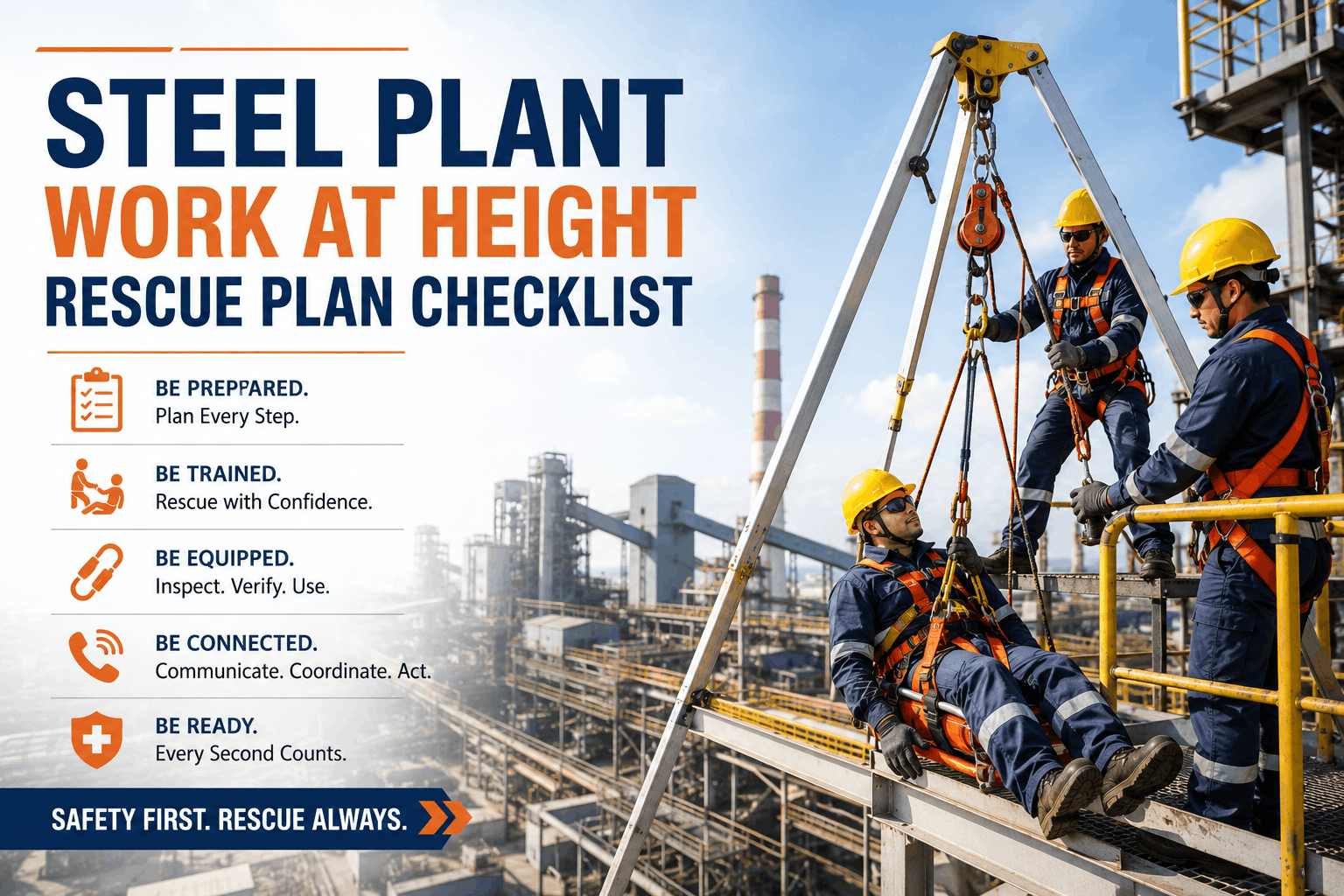
Working at heights above 6 feet in USA general industry exposes workers to fall hazards requiring comprehensive fall protection planning, equipment selection, rescue capability, and incident response readiness. OSHA 1926.502(d)(20) mandates employers provide for prompt rescue of employees in fall events or assure employees can self-rescue. ANSI/ASSP Z359 Fall Protection Code standards establish system design, equipment testing, training requirements, and rescue procedures that represent current best practices exceeding baseline OSHA minimums. Steel plants, power facilities, telecommunications towers, wind turbine sites, and industrial construction operations manage thousands of work-at-height exposures annually across multiple elevations and environmental conditions. A site-specific rescue plan integrated with equipment inspection logs, rescue team qualification records, and practiced drill documentation ensures rescue capability exists before workers ascend to height. Prompt rescue—ideally within 6 minutes per ANSI Z359 guidance—minimizes suspension trauma risk (serious medical emergency occurring when worker hangs in harness, causing loss of consciousness and death in under 30 minutes if unrescued). Oxmaint's rescue plan management system centralizes rescue procedure documentation, rescue team member certifications, equipment inspection histories, rescue drill records, and hazard assessments—all accessible from the work site to confirm rescue readiness before workers begin elevated tasks. Digital rescue planning eliminates outdated paper procedures, tracks team certification expiration, and provides audit trails proving rescue capability met required standards during OSHA inspection.
Manage Work-at-Height Rescue Plans with ANSI Z359 Compliance in OxmaintRescue plan documentation, rescue team assignments, equipment inspection logs, certification tracking, and drill records—all ensuring prompt rescue capability for fall events.
1. Rescue Plan Development & Site-Specific Hazard Assessment
Every work-at-height location requires a written rescue plan documenting potential fall hazards, rescue methods applicable to the site geometry, equipment requirements, and responsible personnel. Plan development must precede any worker exposure to height. OSHA 1926.502(d)(20) requires documented rescue capability; ANSI/ASSP Z359 specifies plan contents including rescue type (self-rescue, assisted mechanical, team-based), equipment specifications, response time targets, and team qualifications.
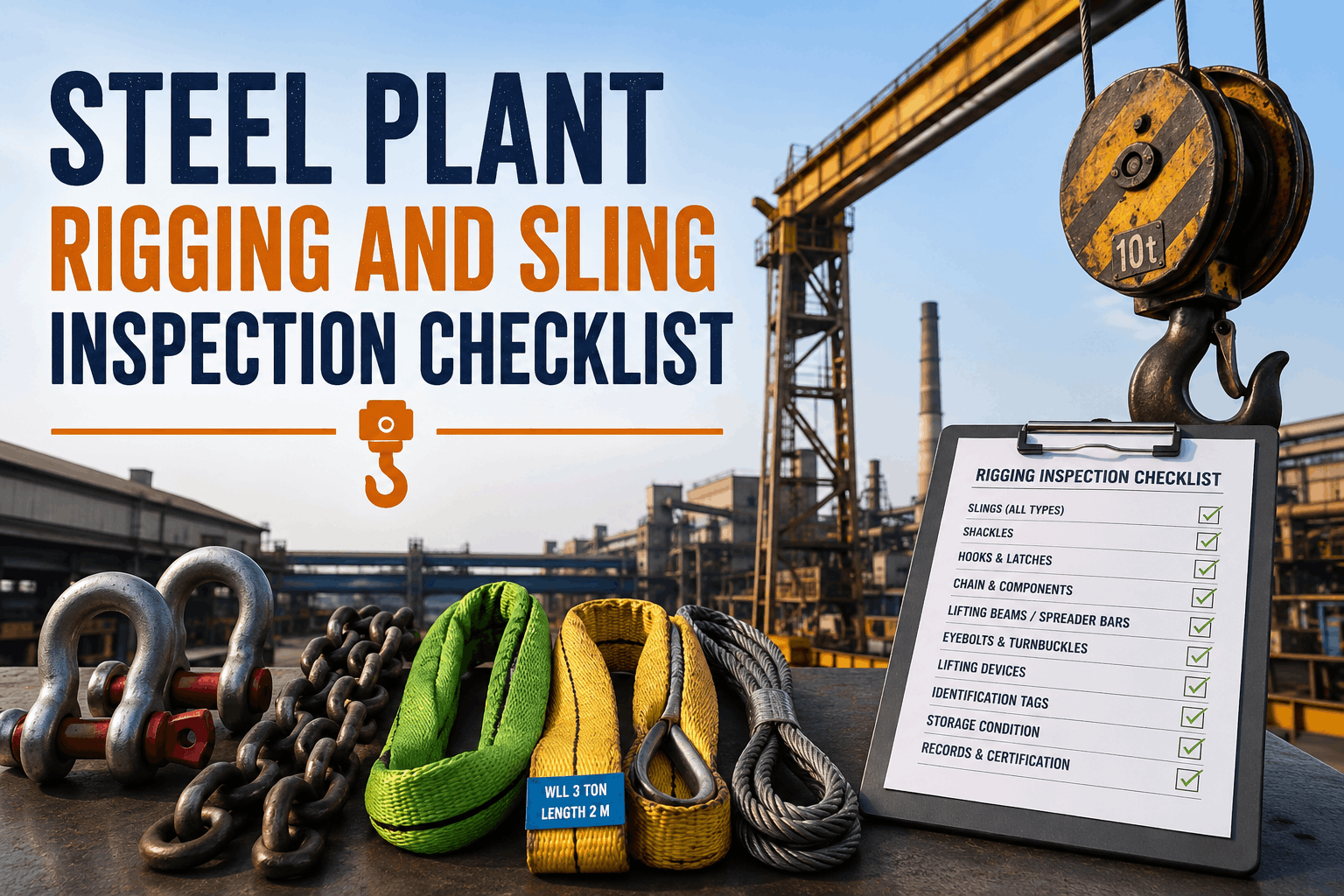
Rescue equipment—harnesses, lanyards, tripods, davits, winches, rope, carabiners, rescue stretchers—must be inspected before every use, documented, and maintained per manufacturer specifications. Equipment failure during rescue causes secondary trauma or death. ANSI/ASSP Z359 standards specify inspection frequency, damage rejection criteria, and maintenance procedures for each equipment class.
3. Rescue Team Qualifications & Training Certification
Rescue team members must be trained, competent in rescue procedures specific to the site rescue method, and current on certifications. ANSI/ASSP Z359.2 distinguishes between competent person (identifies hazards, authorizes work) and qualified person (trained in equipment use, rescue procedures). Rescue personnel must exceed competent person threshold with hands-on rescue technique training and documented proficiency.
4. Rescue Plan Documentation & Site-Specific Procedures
Written rescue plan becomes the operational manual for fall event response. Procedure must be specific to site geometry, equipment available, and rescue team capabilities—generic rescue plans do not satisfy ANSI/OSHA requirements. Documentation must include step-by-step retrieval procedures, communication signals, emergency contact numbers, and site diagrams.
Documented rescue drills annually minimum (more frequently for new heights or procedures) prove rescue team proficiency and identify procedure gaps before actual emergency. Drills record competency, test equipment functionality, and validate response time estimates. Drill documentation supports OSHA compliance defense demonstrating rescue capability met standards.
Ensure Work-at-Height Rescue Readiness with OxmaintRescue plan documentation, team certification tracking, equipment inspection logs, drill scheduling, and compliance records—all meeting ANSI Z359 standards.
"Before Oxmaint, our rescue plans were paper documents gathering dust in the office—rescue team had outdated copies with incorrect contact numbers, equipment inspections were sporadic, and drill records were scattered across filing cabinets. When OSHA inspected our tower climbing program, we couldn't quickly produce proof of rescue drills or team certification documentation. After implementing Oxmaint, rescue plans are digitally current, equipment inspections auto-scheduled monthly, team certifications tracked with renewal alerts, and drill records auto-generate with photos and competency assessments. Next OSHA inspection will be seamless—all documentation instantly accessible from any device."
— Marcus Rodriguez, Safety Director, Tower Services USA, Inc.
Frequently Asked Questions — Work at Height Rescue Plan Checklist
1. What is the difference between OSHA fall protection requirements and ANSI Z359 rescue plan standards?
OSHA 1926.502(d)(20) mandates prompt rescue capability but specifies minimal detail. ANSI/ASSP Z359 Fall Protection Code provides comprehensive technical standards covering system design, equipment testing, rescue procedures, team qualifications, and rescue drills—representing best practice exceeding baseline OSHA requirements. Compliance with ANSI Z359 satisfies OSHA requirements and demonstrates due diligence during accidents.
2. What is suspension trauma and why is the 6-minute rescue target critical?
Suspension trauma occurs when a worker remains suspended in a fall arrest harness after falling. Gravity compresses the thighs, restricting blood return from lower body and causing rapid blood pooling (rhabdomyolysis). Loss of consciousness can occur within 3–5 minutes; death from cardiac arrest within 30 minutes if untreated. Six-minute target allows rescue contact before unconsciousness, maximizing survival likelihood and minimizing permanent injury risk.
3. What qualifications are required for rescue team members under ANSI Z359?
Rescue team members must be trained and certified in: (1) Fall protection and rescue specific to equipment type (tripod/davit rescue, rope rescue, self-rescue), (2) First Aid/CPR, (3) Site-specific rescue procedures, (4) Equipment inspection and maintenance. Certifications must be current; rescue drills must document annual proficiency. Advanced rope rescue requires IRATA or equivalent instructor certification. Training must exceed competent person threshold—qualified person standard applies.
4. How frequently must rescue equipment be inspected per ANSI Z359?
Full-body harnesses, lanyards, and snap hooks must be visually inspected before every use. Mechanical rescue equipment (tripod, davit, winch) requires monthly pre-operational inspection. Rope (dynamic rescue ropes) must be inspected before each use and documented. Load testing of mechanical equipment required annually per manufacturer specification. Ropes must be retired after 5 years maximum.
5. What are the three rescue methods defined in ANSI Z359 rescue plans?
Self-Rescue: worker uses personal equipment (ascenders, harness, rope) to climb out independently. Assisted Rescue: trained team mechanically retrieves worker using tripod winch, davit, or mechanical advantage. Evacuation Rescue: worker is lowered by rope system operated by rescue personnel. Site geometry and conditions determine which method applicable; robust rescue plans may define multiple methods for different fall scenarios.
6. How must rescue drills be documented to satisfy ANSI Z359 and OSHA inspection requirements?
Rescue drill documentation must include: date, location, drill type, participating team members (attendance roster), rescue method tested, equipment used, actual response time measured, competency assessment for each member, any deficiencies noted, and corrective actions taken. Competency checklists for each team member signed by drill observer confirm proficiency. Records retained annually minimum and made available for OSHA inspection on demand.
7. What should be included in a site-specific rescue plan document per ANSI Z359.2?
Site-specific rescue plan must contain: work scope and elevation hazards, potential fall hazards, rescue method(s) feasible for site geometry, equipment required (harness type, rope, mechanical retrieval), rescue team member names and certifications, rescue positioning and access routes, communication signals and procedures, emergency contact numbers, site diagram/photos, step-by-step rescue procedures, expected response time targets, and training/drill schedule.
8. Can rescue plan procedures be generic for multiple sites or must each location have unique documentation?
Rescue plans must be site-specific. Generic rescue procedures do not satisfy ANSI Z359 or OSHA requirements because site geometry, equipment availability, and rescue team positioning vary significantly between locations. Site-specific procedures account for actual elevation, surface type, anchor point locations, and realistic response timelines. Plan must be revised whenever site conditions change or new work scope introduces different fall hazards.