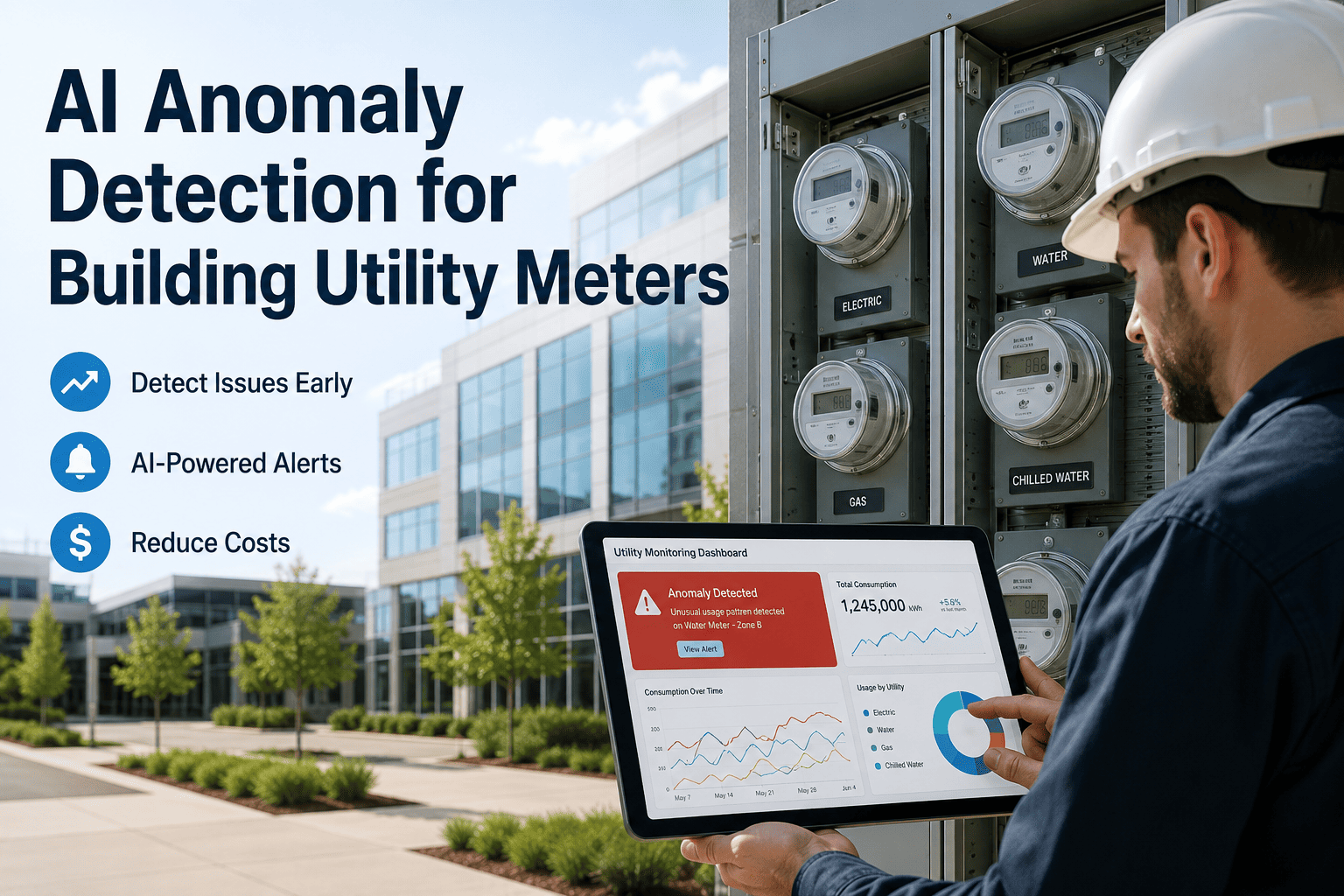
Peak demand charges — the fee utilities bill commercial facilities based on their highest 15-minute electricity consumption in a billing period — account for 30 to 70% of the total electricity bill in many commercial buildings, yet most building maintenance teams have no systematic way to influence them. A single poorly-timed HVAC startup, a simultaneous equipment restart after a power interruption, or an uncoordinated building occupancy surge can set the demand peak for an entire month in under 15 minutes. Oxmaint's Energy and ESG Reporting platform gives maintenance teams the analytics and scheduling tools to identify, reduce, and sustain peak demand charge reductions — or book a free 30-minute demo to calculate your facility's demand charge reduction opportunity.
P1 Priority · Energy Optimization · Article
Peak Demand Charge Reduction for Building Maintenance Teams
For large commercial facilities, peak demand charges routinely represent $50,000 to $400,000 per year in avoidable costs — set by 15-minute windows that maintenance scheduling can directly control. This is the highest-ROI energy optimization activity most maintenance teams are not doing.
70%
of total electricity bill that demand charges can represent in commercial facilities
15min
Window that sets your entire month's demand charge — controllable with scheduling
23%
Average demand charge reduction achieved with load scheduling and analytics
How Peak Demand Charges Work — and Why Maintenance Scheduling Directly Controls Them
Most commercial electricity tariffs include a demand charge component calculated from the peak 15-minute average kW demand recorded by the utility meter during the billing month. This one measurement — set in a 15-minute window that could occur on any day of the month — determines the demand charge that appears on every bill for that month. Maintenance activities that coincide with occupied peak periods or that restart multiple high-draw systems simultaneously are among the most common causes of avoidable demand spikes.
How a Single 15-Minute Window Sets 30 Days of Demand Charges
PEAK — This sets your entire month's demand charge
Wed
The Wednesday peak — caused by simultaneous HVAC startup after a planned outage — sets demand charges for all 30 days. Staggered startup scheduling eliminates the spike.
The 6 Maintenance Actions That Create Avoidable Demand Spikes
Building maintenance teams directly cause a significant portion of peak demand events through scheduling decisions that are not coordinated with interval energy data. Each of these patterns is preventable with the right scheduling and analytics tools.
01
Simultaneous HVAC Startup After Outages
All chillers, AHUs, and pumps restarting at once after a power restoration or planned maintenance outage creates a demand spike that can be 2 to 3 times normal operating load. Staggered restart sequences — programmed into the BAS or maintenance schedule — eliminate this entirely.
02
Maintenance During Morning Occupancy Ramp
Scheduling energy-intensive maintenance tasks — large motor tests, elevator safety tests, pressure washing — during the 7–9 AM occupancy ramp adds to an already-rising demand curve. Shifting these to low-occupancy windows (early morning or weekend) removes the overlap.
03
Uncoordinated EV Charging Peaks
Multiple EV chargers activating during Monday morning arrival creates concentrated demand that stacks on top of HVAC and lighting load. Smart charging schedules that stagger session start times or shift to off-peak windows directly reduce peak demand contribution from the EV fleet.
04
Deferred HVAC Maintenance Causing Efficiency Loss
A chiller operating at 85% efficiency due to fouled condenser tubes draws 18–22% more kW to deliver the same cooling output — increasing both energy cost and peak demand level every hour it operates. Current PM on cooling equipment is a direct demand charge reduction strategy.
05
Compressed Air System Leaks
Unrepaired compressed air leaks force compressors to cycle more frequently, adding baseline load during occupied hours. A 20% leak rate on a 100hp compressor adds approximately 15kW of persistent demand — addressable through routine leak detection maintenance.
06
Lighting Schedules Not Updated After Occupancy Changes
When occupancy patterns shift — new tenants, remote work schedules, seasonal changes — lighting schedules that were optimised for previous patterns maintain full-building illumination during low-occupancy periods, sustaining unnecessary baseline demand.
Maintenance Analytics · Peak Demand Management
See Exactly When Your Demand Spikes — and Why
Oxmaint's energy analytics dashboard overlays interval meter data with maintenance work order schedules, equipment runtime logs, and occupancy patterns — making it immediately visible which maintenance activities are contributing to peak demand events and what scheduling changes will reduce them.
Peak Demand Reduction Impact by Strategy — Real Data
The table below summarises documented demand charge reductions from commercial building energy management programs, aligned to the maintenance scheduling and analytics strategies Oxmaint supports directly.
| Strategy |
Typical Demand Reduction |
Implementation Type |
Payback Period |
| Staggered HVAC startup sequencing |
8–18% demand reduction |
BAS programming + maintenance scheduling |
Immediate — no capital required |
| HVAC preventive maintenance (current PM) |
5–12% demand reduction |
Scheduled maintenance compliance |
1–3 months vs. deferred PM cost |
| EV charging load management |
3–15% depending on fleet size |
Smart charging schedule + network integration |
2–6 months |
| Compressed air leak repair program |
5–10% demand reduction |
Leak detection survey + corrective work orders |
3–9 months |
| Lighting schedule optimization |
4–10% demand reduction |
BAS reprogramming + occupancy sensor calibration |
1–4 months |
| BESS peak shaving deployment |
15–40% demand reduction |
BESS dispatch + maintenance program |
3–7 years (capital-intensive) |
Expert Review
RW
Robert Walsh
Certified Energy Manager (CEM) · Commercial Building Energy Consultant · ASHRAE Member
"Peak demand charges are the largest single controllable energy cost in most commercial buildings, and maintenance scheduling is the most underutilised lever for reducing them. Every facility manager I work with is focused on equipment efficiency — and rightly so — but the scheduling dimension is equally important and almost entirely free to implement. A 10% demand charge reduction from staggered startup sequencing and off-peak maintenance scheduling costs nothing in capital and delivers immediate, permanent savings. What it requires is data — interval-level load visibility that shows you exactly when demand spikes occur and what equipment is contributing — and a maintenance scheduling system that can coordinate activity timing against that data. Oxmaint is the first CMMS I have seen that actually closes that loop between maintenance scheduling and energy analytics in a way that makes the demand charge reduction directly manageable from the maintenance team's workflow."
Frequently Asked Questions
How does Oxmaint identify which maintenance activities are contributing to peak demand events?
Oxmaint overlays interval-level electricity consumption data — pulled from smart meters or building energy management systems via API — with the maintenance work order schedule and equipment runtime logs. When a demand spike aligns with a specific maintenance activity (large motor test, pressure washing, post-outage restart), the correlation is visible in the energy analytics dashboard. This is the analysis that identifies exactly which scheduling changes will reduce peak demand — without guesswork.
Start a free trial to connect your meter data to the maintenance schedule.
Can Oxmaint help schedule preventive maintenance specifically to avoid peak demand windows?
Yes. Oxmaint's maintenance scheduling module allows work orders to be configured with preferred scheduling windows — avoiding peak tariff periods and high-occupancy hours. For recurring PM tasks on high-draw equipment (chiller services, elevator safety tests, large motor PM), the scheduler automatically places these in low-demand windows unless specifically overridden. Over time, this creates a maintenance schedule that is inherently demand-optimised — reducing peak contributions from maintenance activities without requiring separate manual coordination between the maintenance team and the energy manager.
Book a demo to see the scheduling workflow.
What is the typical annual demand charge savings for a commercial building using Oxmaint for peak reduction?
Results vary significantly by facility size, current demand charge rate, and baseline scheduling practices. In documented commercial building programs using maintenance scheduling analytics and load coordination strategies, demand charge reductions of 10 to 25% are consistently achievable within the first 12 months without capital investment. For a 200,000 sq ft office building with an annual demand charge of $180,000, a 15% reduction represents $27,000 per year in direct savings — typically recovering the annual Oxmaint platform cost many times over in the first year alone.
Does Oxmaint integrate with utility interval metering data for demand tracking?
Oxmaint integrates with interval meter data from utility Green Button APIs, smart meter data platforms, and building energy management systems to pull 15-minute interval consumption data directly into the energy analytics dashboard. This data is available in the platform within 24 hours of the meter recording it — providing the near-real-time visibility needed to identify demand peaks before the billing cycle closes and to verify the impact of scheduling changes on demand levels. The platform also tracks monthly demand charge history, making year-over-year reduction progress visible in a single report view.
Energy Optimization · Maintenance Analytics · Demand Charge Reduction
Your Next Bill Has a Demand Charge You Could Have Reduced
Oxmaint connects maintenance scheduling to energy analytics — so every work order is placed with demand visibility, every HVAC startup is staggered, and every peak demand spike from maintenance activity is eliminated before it sets the month's bill.