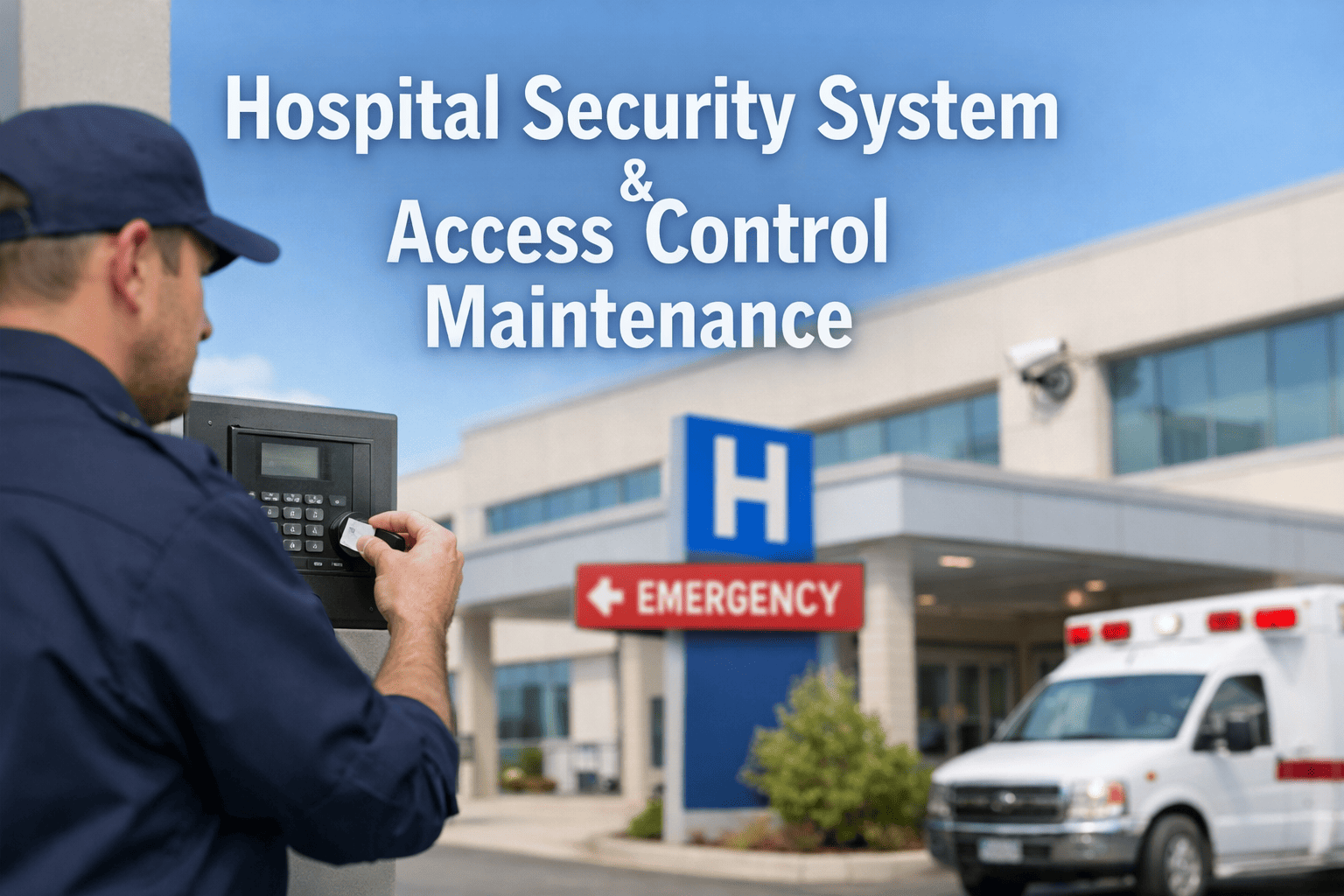
When a clinic's emergency generator fails to start during a power outage, the consequences extend far beyond inconvenience. Ventilators stop, medication refrigerators warm, patient monitors go dark, and the cascade of equipment failures can transform a routine outage into a life-threatening emergency. The Joint Commission reports that electrical system failures rank among the top cited deficiencies during healthcare facility surveys, with penalties reaching $16,000 per OSHA citation for serious violations. Yet the root cause isn't typically faulty equipment—it's inadequate testing documentation and fractured data governance that leaves clinics unable to prove their systems were properly maintained.
For outpatient clinics, urgent care facilities, and ambulatory surgery centers operating without the engineering departments of large hospital systems, the challenge compounds. NFPA 110 mandates monthly generator load tests, quarterly transfer switch inspections, and 36-month comprehensive testing cycles—all requiring meticulous documentation that survives CMS audits and insurance investigations. The question isn't whether your emergency power systems work; it's whether you can prove they've been tested according to regulatory specifications when an auditor arrives unannounced or when a power-related incident triggers an investigation. This is where the intersection of emergency power testing and data governance becomes critical to clinic operations, patient safety and regulatory survival.
| Regulatory Body | Key Requirements | Testing Frequency | Documentation Retention |
|---|---|---|---|
| Joint Commission | EC.02.05.03 & EC.02.05.07 - Emergency power inventory, testing protocols, contingency planning | Monthly (30-min load), Annual (comprehensive), 36-month (4-hour) | Minimum 3 years; recommended 7+ years |
| NFPA 110 | Level 1 EPSS requirements for healthcare, load testing at 30% nameplate minimum | Monthly load tests, weekly inspections, annual comprehensive | Life of equipment plus 3 years |
| NFPA 99 | Risk-based Categories 1-4, Essential Electrical System (EES) requirements | Based on risk category; Category 1 most stringent | Per facility policy; audit-accessible |
| CMS CoP | Conditions of Participation for Medicare/Medicaid reimbursement eligibility | Aligned with NFPA and Joint Commission | Audit-ready at all times |
| State AHJ | Authority Having Jurisdiction - local fire marshal and health department requirements | Varies by jurisdiction; often stricter than federal | Per local code; typically 5-7 years |
Optimize healthcare reliability with smart scheduling
The complexity of emergency power testing lies not in the tests themselves, but in orchestrating them across multiple regulatory frameworks while maintaining operational continuity. A typical outpatient surgical center must coordinate monthly 30-minute generator load tests at intervals not exceeding 40 days, automatic transfer switch (ATS) testing on the same schedule, weekly visual inspections, quarterly battery system checks, and a comprehensive 4-hour load test every 36 months. Miss a single test window, and your facility falls out of compliance. Document a test incorrectly, and auditors may treat it as if the test never occurred.
Smart scheduling transforms this complexity into manageable, automated workflows. Rather than relying on wall calendars or spreadsheet reminders that get overlooked during busy clinic days, digital maintenance platforms calculate optimal testing windows, automatically assign tasks to qualified personnel, and escalate overdue items before they become compliance violations. Clinics implementing structured testing schedules report 40% reductions in missed inspection windows and significant improvements in audit outcomes. The key is shifting from reactive scheduling—waiting until tests are due—to predictive scheduling that accounts for staff availability, patient volumes, and regulatory timing requirements. Facilities exploring this transition can connect with compliance specialists to evaluate their current testing workflows against regulatory requirements.
From reactive to predictive — a healthcare framework with digital logs
The healthcare industry's evolution from reactive maintenance to predictive strategies represents more than operational efficiency—it's a fundamental shift in patient safety philosophy. Reactive maintenance waits for equipment failure before responding; preventive maintenance follows calendar-based schedules regardless of actual equipment condition; predictive maintenance uses real-time data to anticipate failures before they occur. For emergency power systems, this progression has profound implications. A generator that receives monthly load tests but shows declining performance metrics between tests presents a risk that calendar-based maintenance cannot address.
Digital logs provide the foundation for this evolution. Paper-based testing records capture what happened; digital systems capture why, how, and what it means for future performance. When a technician documents a monthly generator test digitally, the system automatically timestamps the entry, captures the testing parameters, compares results against baseline performance, flags anomalies for review, and stores the complete record in a tamper-proof audit trail. This data accumulation enables trend analysis that reveals gradual performance degradation invisible to monthly spot-checks. Industry data indicates that predictive maintenance reduces equipment failures by 70% and decreases unplanned downtime by 35-45% compared to reactive approaches.
The data governance framework extends beyond simple record-keeping to encompass the entire lifecycle of compliance information. Clinics must establish clear policies for data retention (minimum 7 years for most healthcare records), access controls (who can view, edit, and approve testing documentation), backup procedures (ensuring records survive facility disasters), and integration standards (how testing data connects with equipment management, billing, and risk management systems). Organizations looking to establish or strengthen their data governance practices can schedule a consultation to assess their current documentation capabilities against regulatory expectations.
Risk Categories and Testing Requirements by Facility Type
NFPA 99 establishes a risk-based approach that determines emergency power requirements based on the potential impact of electrical failure on patient safety. Understanding your facility's risk category is essential for designing appropriate testing protocols and documentation systems. Category 1 facilities—those where electrical failure could result in serious injury or death—face the most stringent requirements, while Category 4 facilities with minimal patient impact operate under more relaxed standards.
Many clinics discover during audits that they've miscategorized their facility or specific areas within it. An outpatient surgery center performing procedures under general anesthesia operates under Category 1 requirements for its operating suites, even if the rest of the facility qualifies for Category 2 or 3 classification. This mixed-category reality demands documentation systems that track testing requirements by area and equipment, not just at the facility level. Digital compliance platforms handle this complexity by associating specific testing protocols with individual assets based on their location and function, ensuring that operating room backup systems receive more frequent and rigorous testing than administrative area equipment.
Building Your Emergency Power Testing Protocol
Effective emergency power testing protocols balance regulatory compliance with operational practicality. The goal isn't simply to check boxes on an audit form—it's to ensure that when the grid fails during a surgical procedure or a patient's life support requires uninterrupted power, your systems perform flawlessly. This requires testing protocols that simulate real-world failure scenarios, not just routine maintenance tasks that confirm equipment starts when commanded.
Clinics frequently underestimate the documentation requirements associated with test failures. When a generator doesn't start within the required 10-second window or an ATS fails to transfer load properly, the testing protocol must capture not only the failure itself but the immediate remediation steps, root cause analysis, corrective actions taken, and verification that repairs resolved the issue. These failure documentation requirements often exceed the documentation for successful tests—and they're exactly what auditors scrutinize most closely. Facilities managing complex testing protocols can access implementation guidance for structuring their documentation workflows to capture both routine successes and exception handling.
Expert Review: The Compliance Documentation Imperative
In healthcare compliance, the documentation is the compliance. It doesn't matter if your generator ran flawlessly for a decade if you can't produce records proving it was tested according to schedule. Digital CMMS platforms have fundamentally changed our audit preparation from weeks of file-cabinet archaeology to minutes of report generation. The real transformation isn't efficiency—it's confidence. We know our records are complete, accurate, and defensible before auditors even arrive.
The expert consensus is clear: digital compliance documentation isn't a nice-to-have technology upgrade—it's a fundamental shift in how healthcare facilities manage risk, demonstrate regulatory adherence, and protect both patients and institutional viability. Facilities still relying on paper-based systems face increasing competitive disadvantages as regulatory expectations evolve and auditors become more sophisticated in their documentation analysis. Clinics considering the transition to digital compliance management can schedule a demonstration to see how modern platforms address their specific regulatory challenges.
Conclusion: Compliance as Competitive Advantage
Emergency power systems testing and data governance represent two sides of the same patient safety coin. Testing ensures your systems function when lives depend on them; documentation proves you've maintained the vigilance that regulations require and patients deserve. For clinics operating without the compliance infrastructure of large hospital systems, digital CMMS platforms level the playing field—providing the automated scheduling, standardized documentation, and audit-ready reporting that transform regulatory compliance from a burden into a strength.
The facilities that thrive under increasing regulatory scrutiny are those that view compliance not as a cost center but as an investment in operational excellence. When your emergency power testing protocol is documented with digital precision, when your data governance framework ensures every record is complete and defensible, when your compliance dashboards reveal trends before they become problems—you've built more than compliance. You've built confidence that your facility can protect patients during power emergencies and demonstrate that protection to any auditor, insurer, or legal proceeding that requires proof. That confidence, backed by comprehensive digital documentation, becomes a competitive advantage in an industry where patient safety and regulatory standing directly impact reimbursement rates, insurance premiums, and institutional reputation.