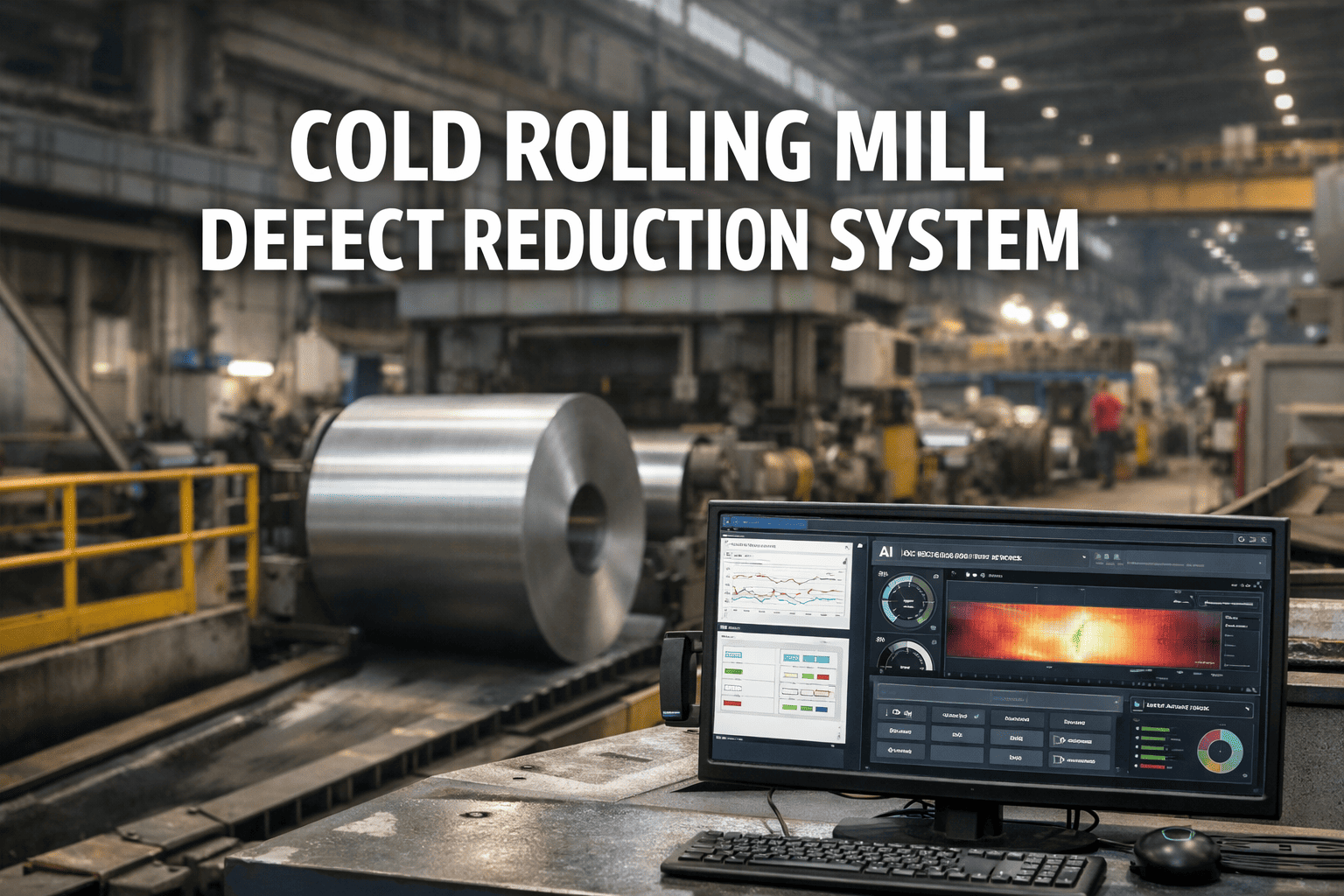
Rolling mills operate in extreme conditions where surface defects, dimensional variations, and equipment wear can compromise product quality within seconds. Traditional manual inspection methods catch only a fraction of defects, leaving steel manufacturers vulnerable to customer complaints, quality downgrades, and costly rework. Digital quality inspection systems transform this reactive approach into proactive quality assurance, detecting defects in real-time and linking inspection data directly to maintenance workflows. Schedule a consultation to explore how digital inspection can elevate quality standards at your rolling mill.
Why Digital Inspection for Rolling Mills
Steel manufacturers face mounting pressure from automotive, construction, and appliance customers demanding tighter tolerances and documented quality assurance. Manual inspection methods that rely on periodic sampling and visual checks can no longer meet these demands in high-speed production environments.
87%
of defects detected before they reach customers with automated inspection
40%
reduction in quality-related customer complaints through real-time monitoring
<15min
defect detection time versus days with manual sampling methods
Ready to eliminate quality escapes and reduce customer complaints? Join leading steel manufacturers using digital inspection systems integrated with maintenance management.
Surface and dimensional defects in rolling mills originate from multiple sources including roll wear, temperature variations, material inclusions, and equipment misalignment. Each defect type requires specific detection approaches for reliable identification.
Surface Cracks
Cause: Excessive reduction, temperature gradients, or material inclusions
Detection: High-resolution cameras with edge detection algorithms
Action: Automatic work order generation for roll inspection
Roll Marks
Cause: Damaged or worn rolls, foreign particles on roll surface
Cause: Roll gap inconsistency, hydraulic system issues
Detection: X-ray or isotope gauges with continuous measurement
Action: Automatic roll gap adjustment or maintenance alert
Digital Inspection System Architecture
Modern quality inspection systems combine multiple sensor technologies, edge computing, and centralized data management to deliver comprehensive quality assurance across the entire rolling process.
Inspection System Components
1
Sensor Array
High-speed cameras, laser scanners, and dimensional gauges capture surface and geometric data at line speeds up to 20 m/s. Multi-view sensors ensure 100% surface coverage.
2
Edge Processing
Industrial computers perform real-time image processing and defect classification at the production line. Sub-second analysis enables immediate quality decisions.
3
Classification Engine
AI-powered defect classification identifies defect types, severity, and probable root causes. Machine learning models improve accuracy over time with operator feedback.
4
CMMS Integration
Direct connection to maintenance management systems enables automatic work order creation, predictive maintenance scheduling, and quality-maintenance correlation analysis. Sign up for Oxmaint to centralize inspection and maintenance data.
See digital inspection in action. Book a demo and we will show you real-time defect detection and automatic maintenance workflow integration.
Comprehensive quality assurance requires inspection at multiple stages of the rolling process, from incoming material through final coiling. Each inspection point serves specific quality and maintenance purposes.
Inspection Configuration by Process Stage
Process Stage
Inspection Type
Key Defects Detected
Maintenance Link
Entry Section
Surface and dimensional
Incoming material defects, width variations
Supplier quality feedback, material routing
Roughing Mill
Shape and flatness
Edge cracks, camber, crown variations
Roll alignment, bearing condition monitoring
Finishing Mill
Surface and thickness
Roll marks, scratches, gauge deviation
Roll shop scheduling, hydraulic system PM
Cooling Section
Temperature profile
Uneven cooling, thermal distortion
Cooling header maintenance, nozzle cleaning
Coiler
Final surface quality
Coil set, edge damage, surface finish
Mandrel maintenance, wrapper roll condition
Traditional vs. Digital Quality Inspection
Understanding the fundamental differences between manual and automated inspection reveals why leading steel manufacturers are transitioning to digital quality systems.
Inspection Approach Comparison
Manual Inspection
Periodic sampling inspects less than 1% of production
Subjective quality assessment varies by operator
Defect detection delayed until post-production
Paper-based records difficult to analyze
No automatic link to maintenance activities
8-15%
defect escape rate to customers
Digital Inspection
100% surface coverage at full line speed
Consistent, objective defect classification
Real-time detection enables immediate response
Searchable digital records support analysis
Automatic work order generation in CMMS
<2%
defect escape with automated systems
See How Integrated Scheduling Works for Steel Operations
Book a personalized demo tailored to your plant's specific requirements.
Key Benefits of Integrated Inspection-CMMS Systems
When quality inspection data flows directly into maintenance management systems, manufacturers gain visibility into the relationship between equipment condition and product quality, enabling data-driven decisions that improve both.
Predictive Roll Maintenance
Correlate defect patterns with specific rolls to schedule changes before quality degrades, extending roll life while maintaining surface quality standards.
Reduced Downtime
Plan maintenance during scheduled shutdowns based on actual equipment condition data, avoiding emergency stops that disrupt production schedules.
Quality Documentation
Automatic documentation links quality records to maintenance history, supporting customer audits and continuous improvement initiatives.
Cost Reduction
Reduce scrap, rework, and customer claims by catching defects early and addressing root causes through targeted maintenance actions.
Start Improving Your Steel Plant Operations Today
Create a free Oxmaint account and explore features designed for manufacturing environments.
Effective maintenance scheduling directly impacts both equipment reliability and product quality. Understanding how traditional methods compare to integrated CMMS scheduling reveals the competitive advantages of modern maintenance management.
Scheduling Approach Comparison
Traditional Methods
Manual scheduling using spreadsheets
Limited visibility into equipment status
Reactive response to breakdowns
Disconnected maintenance planning
Difficult to optimize across departments
57%
of facilities still rely on run-to-failure maintenance
Integrated CMMS Scheduling
Automated schedule optimization
Real-time equipment health visibility
Proactive maintenance coordination
Unified production and maintenance planning
Cross-functional optimization
85%
of CMMS users experience less unplanned downtime
ROI of Digital Quality Inspection
Investments in quality inspection systems deliver returns through reduced scrap, fewer customer claims, optimized maintenance timing, and improved product grades. The financial impact compounds when inspection data integrates with maintenance management.
Documented Benefits from Steel Mill Deployments
70%
Reduction in quality-related customer complaints
60%
Faster defect root cause identification
45%
Improvement in first-pass quality rates
30%
Extension of roll life through optimized maintenance
Calculate your potential savings. Create a free Oxmaint account and our team will help model the ROI for your rolling mill operation.
Successful digital inspection deployment requires careful planning across sensor selection, integration architecture, and operator training. A phased approach delivers quick wins while building toward comprehensive quality management.
Typical Deployment Roadmap
1
Week 1-2
Assessment
Quality audit, defect prioritization, inspection point selection
Full operation, continuous improvement, expansion planning
Transform Rolling Mill Quality with Digital Inspection
Your manual sampling catches only a fraction of surface defects. Oxmaint helps you connect digital inspection systems to maintenance workflows, automatically generating work orders when quality issues emerge and tracking the maintenance actions that improve product quality.
How quickly can we see ROI from digital inspection systems?
Most rolling mills identify significant quality improvements within the first 30 days of deployment. Quick wins from catching defects early and correlating them with equipment issues often pay for the system within 6-12 months. Schedule a consultation to discuss expected ROI for your specific operation.
Can inspection systems work at high line speeds?
Modern inspection systems operate reliably at speeds up to 20 m/s for flat products and even higher for wire rod applications. High-speed cameras with specialized lighting and edge computing enable real-time defect detection without slowing production.
How does inspection data connect to maintenance systems?
Integration typically uses standard protocols like OPC-UA or REST APIs to transfer defect data, classifications, and location information directly to CMMS platforms like Oxmaint. This enables automatic work order creation and maintenance scheduling based on quality trends. Sign up for a free account to explore integration capabilities.
What training do operators need for digital inspection systems?
Modern systems are designed for operators, not data scientists. Typical training covers defect review interfaces, classification validation, and response procedures. Most operators become proficient within 1-2 weeks of hands-on use.
Can inspection systems detect defects on hot material?
Yes. Specialized sensors using 3D laser triangulation and thermal imaging can detect surface defects on material at temperatures up to 1,000 degrees Celsius. These systems distinguish between actual defects and normal surface texture variations. Book a demo to see hot mill inspection capabilities.