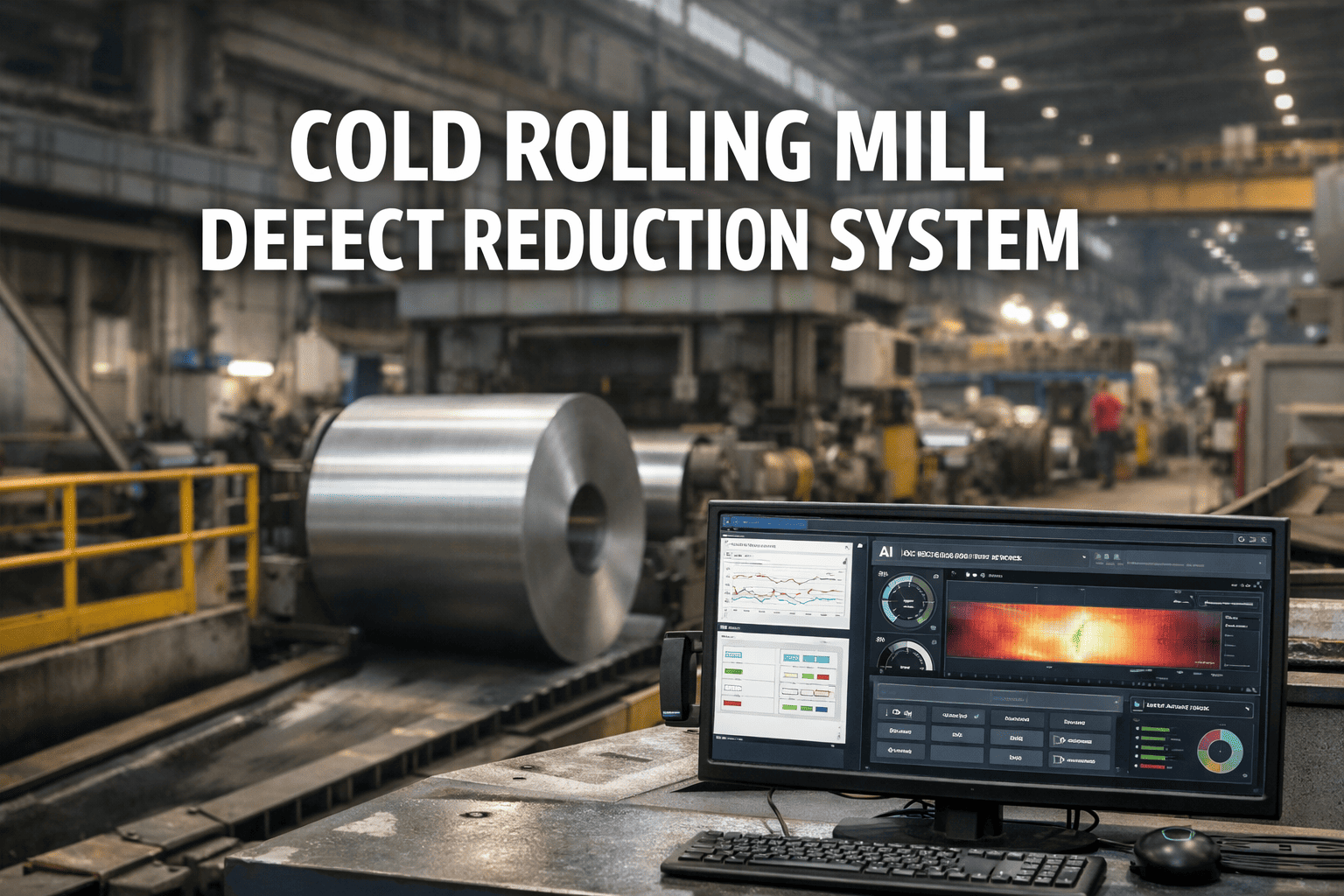
Vision AI Implementation Checklist for Manufacturing
By oxmaint on January 23, 2026
Implementing vision AI in manufacturing is no longer a futuristic concept—it's a competitive necessity. With the global machine vision market projected to reach $41.7 billion by 2030 and manufacturers achieving up to 99% defect detection accuracy, the question isn't whether to adopt this technology, but how to do it right. This comprehensive checklist guides you through every critical step, from initial assessment to full-scale deployment, ensuring your vision AI implementation delivers measurable ROI within months, not years. Schedule a consultation to explore how AI-powered inspection can transform quality control at your facility.
Why Vision AI Implementation Matters Now
Manufacturing facilities worldwide are racing to adopt vision AI systems, driven by mounting pressure for zero-defect production, skilled labor shortages, and the need for real-time quality intelligence. Traditional inspection methods—whether manual or rule-based machine vision—simply cannot keep pace with modern manufacturing demands.
The Business Case for Vision AI
374%
Average three-year ROI from computer vision implementations according to industry studies
6-12mo
Typical payback period for AI vision systems through reduced scrap and inspection costs
99%+
Defect detection accuracy achievable with modern AI vision systems vs. 85-90% traditional methods
37%
More critical defects detected by AI systems compared to expert human inspectors
Ready to eliminate quality defects and reduce inspection costs? Join leading manufacturers using AI vision to achieve zero-defect production targets.
Successful vision AI deployment begins long before cameras are installed. This foundational phase establishes clear objectives, identifies optimal use cases, and builds the business case that ensures organizational buy-in and resource allocation.
Assessment ChecklistWeek 1-3
Phase 2: Data Foundation & Training
AI models are only as good as the data they learn from. This phase focuses on building the comprehensive training dataset that enables accurate defect detection across all product variations and operating conditions.
Data Preparation ChecklistWeek 4-6
Need help with AI model training? Our team provides guidance on data collection, annotation, and model optimization for manufacturing applications.
Choosing the right vision hardware is critical—cameras, lighting, and computing infrastructure must match your specific inspection requirements and production environment.
Vision System Hardware Options
Smart Cameras
Compact, all-in-one design
Built-in processing capabilities
Faster deployment, lower cost
Best for simpler inspections
Limited customization options
Fastest Growingsegment in 2025
PC-Based Systems
High processing power
Advanced AI algorithms
Maximum flexibility
Complex multi-camera setups
Higher upfront investment
61%market share in 2024
Hardware & Installation ChecklistWeek 7-9
Phase 4: System Integration
Vision AI delivers maximum value when integrated with existing plant systems—MES, ERP, CMMS, and SCADA. This phase connects inspection intelligence to operational workflows.
Integration Requirements Matrix
System
Integration Type
Key Benefits
MES/MOM
Real-time bidirectional
Production tracking, batch traceability, quality correlation
SCADA/DCS
Event-triggered
Automated line stops, process parameter adjustment
CMMS/EAM
Work order generation
Maintenance triggers, equipment health correlation
Seamless integration reduces implementation complexity and enables automated workflows from defect detection to corrective action.
ROI Metrics to Track
Measuring the right metrics ensures your vision AI investment delivers proven business value and supports the case for continued expansion.
Key Performance IndicatorsTrack these metrics monthly to quantify ROI
Scrap
Reduction in scrap and rework costs
Labor
Manual inspection labor savings
Escapes
Defect escape rate to customers
Speed
Inspection throughput improvement
Start Your Vision AI Implementation Journey
Successful vision AI deployment requires the right combination of technology, process, and organizational readiness. Oxmaint helps manufacturers connect quality inspection data with maintenance and operations systems—enabling automated workflows from defect detection through corrective action.
How long does a typical vision AI implementation take?
Most manufacturers complete initial pilot deployment in 10-16 weeks, with production systems operational in days rather than months. Modern AI platforms with pre-configured models can be fine-tuned in hours with as few as five images. Book a demo to discuss a realistic timeline.
What ROI can we expect from vision AI implementation?
Industry studies show average three-year ROI of 374% with payback periods of 6-12 months. Specific returns depend on your current defect rates, inspection costs, and customer return volumes.
How many training images do AI vision systems need?
Modern self-supervised learning systems can train production-grade models with as few as 5-10 images per defect type. Advanced data augmentation techniques reduce sample requirements by 10x compared to traditional approaches.
Can vision AI integrate with our existing MES and CMMS systems?
Yes. Modern vision AI platforms support standard industrial protocols including Modbus, OPC-UA, and REST APIs for seamless integration with MES, ERP, SCADA, and maintenance management systems.
What accuracy levels can AI vision systems achieve?
Leading AI vision systems achieve 99%+ defect detection accuracy, detecting surface defects as small as 0.1mm. This compares to 85-90% accuracy from traditional machine vision.