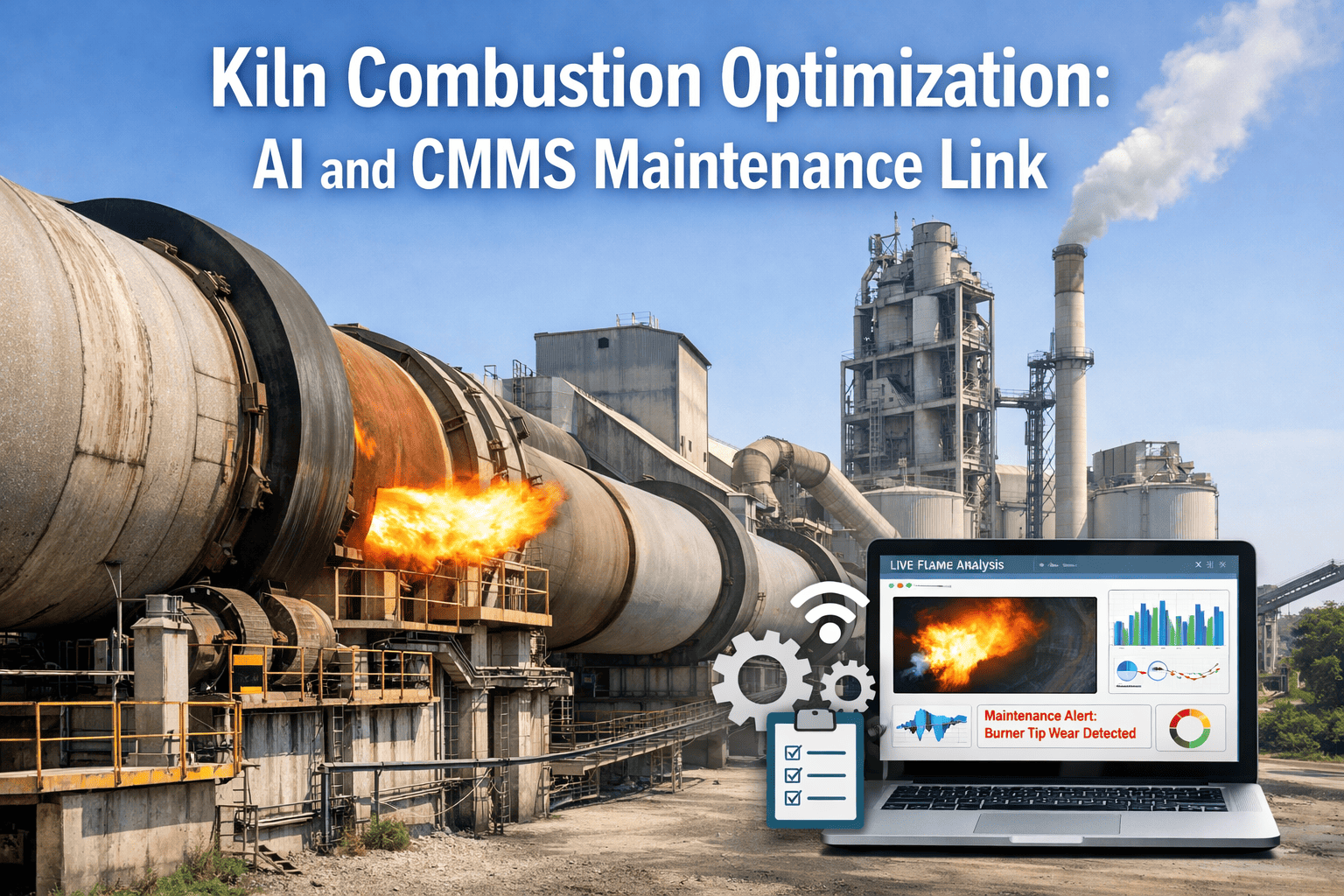
Cement plants co-firing waste-derived fuels — RDF, SRF, tire-derived fuel, biomass, and sewage sludge — unlock real fuel cost savings and decarbonization credits, but every percentage point increase in thermal substitution rate introduces combustion variability that directly stresses kiln refractory, unsettles clinker chemistry, and triggers additional emission monitoring obligations. Oxmaint's CMMS tracks alternative fuel blend records, kiln response data, and maintenance impact correlations in one place — so engineers can push TSR higher without losing control of equipment life or compliance. Book a demo to see AF combustion tracking configured for your kiln line.
What Changes When You Introduce Alternative Fuels
Alternative fuels are not drop-in replacements for coal or petcoke. Each fuel stream introduces a different calorific value, moisture level, chlorine content, and ash chemistry — and those variables change batch to batch. Without systematic tracking of what was fired, when, and what the kiln responded with, AF programs run on guesswork and get blamed for every maintenance event that follows.
Higher alkali and chlorine inputs from RDF and biomass increase volatile circulation, destabilizing the protective coating layer and accelerating chemical attack on burning zone brick. Untracked fuel blend changes make it impossible to correlate wear rate spikes with their cause.
Chlorine and sulfur from MSW and SRF circulate through the preheater-kiln system, forming alkali chloride deposits and kiln rings. Build-up in cyclone stages and the kiln inlet creates blockage risk requiring emergency intervention — costing $50,000–$200,000 per unplanned stop.
Lower-calorific fuel batches reduce flame temperature, shifting the burning zone and raising free lime content in clinker. Tire-derived fuel introduces iron and zinc through steel wire, altering LSF and modulus values. Without correlated fuel-to-clinker logs, quality excursions are reactive rather than predicted.
Higher chlorine inputs demand bypass system activation and continuous HCl monitoring. NOx and SO2 profiles shift with each fuel blend change. Regulators require documented fuel quality data linked to emission readings — a requirement most plants cannot meet from shift logs alone.
Increasing TSR Without Losing Control Starts With Tracking What You Fire
Oxmaint links every AF delivery record to the kiln run it powered — creating the fuel-to-maintenance correlation that separates profitable AF programs from expensive ones. Book a demo to see how AF tracking works in your kiln environment.
What Oxmaint Tracks Across Your AF Program
Oxmaint builds a structured data layer connecting fuel quality inputs, kiln operating response, maintenance events, and emission readings — turning a set of disconnected operator observations into a searchable, auditable AF performance record.
Every AF delivery logged with proximate analysis results — calorific value, moisture, chlorine content, particle size, and heavy metal limits — against the permitted specification. Batch records timestamped and linked to the kiln run window they were consumed in. Non-conforming deliveries trigger corrective work orders before the fuel enters the feed system.
TSR calculated and logged per kiln run using fuel volumes and calorific values. Trend dashboard shows TSR over time alongside key maintenance and quality outcomes — making the relationship between substitution rate changes and equipment response visible at a glance. Supports decarbonization reporting and EU ETS carbon intensity calculations.
Shell scan readings logged zone-by-zone after each inspection and after significant fuel blend changes. Refractory wear rate trends correlated against TSR and fuel type history — identifying which fuel streams are accelerating lining degradation before the damage reaches critical thresholds. Automated alerts when zone temperatures approach reline decision points.
Preheater blockage, kiln ring, and cyclone build-up events recorded with the preceding fuel blend data attached. Over time, the system identifies which fuel combinations or chlorine input levels precede build-up events — enabling proactive feed rate adjustments before the next episode requires emergency intervention.
When CEMS records an NOx, SO2, or HCl exceedance, Oxmaint auto-generates a corrective work order with the preceding fuel blend data pre-attached — giving the engineer the context needed to act, not just an alarm to acknowledge. Emission-fuel correlation logs satisfy regulatory audit requirements for documented corrective response.
Free lime exceedances, LSF deviations, and silica modulus shifts are logged against the fuel blend that preceded them. Engineers can filter clinker quality history by fuel type to identify which AF streams create quality risk at higher substitution rates — enabling confident TSR optimization without sacrificing cement specification compliance.
AF Fuel Type: Risk and Maintenance Intensity at a Glance
Not all alternative fuels create equal maintenance pressure. The table below summarises the primary maintenance impacts of the most common cement plant AF streams — and what Oxmaint tracks for each.
| Fuel Type | Typical TSR Ceiling | Primary Maintenance Risk | Key Chemical Concern | Oxmaint Tracking Focus |
|---|---|---|---|---|
| RDF / SRF | 30–60% | Preheater blockages, kiln ring formation, bypass overload | Chlorine content — drives alkali chloride circulation and deposit buildup | Cl per batch log, ring formation work order correlation, bypass activation frequency |
| Tire-Derived Fuel (TDF) | 20–40% | Burning zone refractory accelerated wear, iron modulus shifts | Zinc and iron from steel wire — affects clinker mineralogy at high TSR | Iron modulus deviation logs, refractory zone wear rate vs TDF TSR correlation |
| Biomass (Wood, Agricultural) | 20–50% | Alkali-driven preheater blockages, coating instability at high K2O inputs | High potassium and sodium in ash — accelerates volatile cycle buildup | Alkali input per run, shell temperature trend after blend change, blockage event log |
| Sewage Sludge | 5–15% | Reduced flame temperature, free lime elevation, heavy metal monitoring obligations | Phosphorus — can disrupt C3S formation and reduce clinker reactivity at >10% TSR | Free lime deviation log vs sludge blend %, heavy metal batch certificates, CEMS correlation |
| Waste Oil / Liquid Hazardous | 10–25% | Burner nozzle wear, flame instability if calorific value varies batch-to-batch | Sulfur and heavy metals — NOx and SO2 monitoring obligation increases | Calorific value vs flame parameter logs, burner inspection interval, CEMS exceedance linkage |
From Unlinked Events to Correlated Intelligence
Frequently Asked Questions
Higher TSR. Stable Refractory. Clean Compliance Record.
AF combustion quality tracking, kiln response correlation, refractory wear monitoring, and emission compliance documentation — deployed from your existing kiln data in 3 to 4 weeks. No SCADA replacement. No sensor installation required.