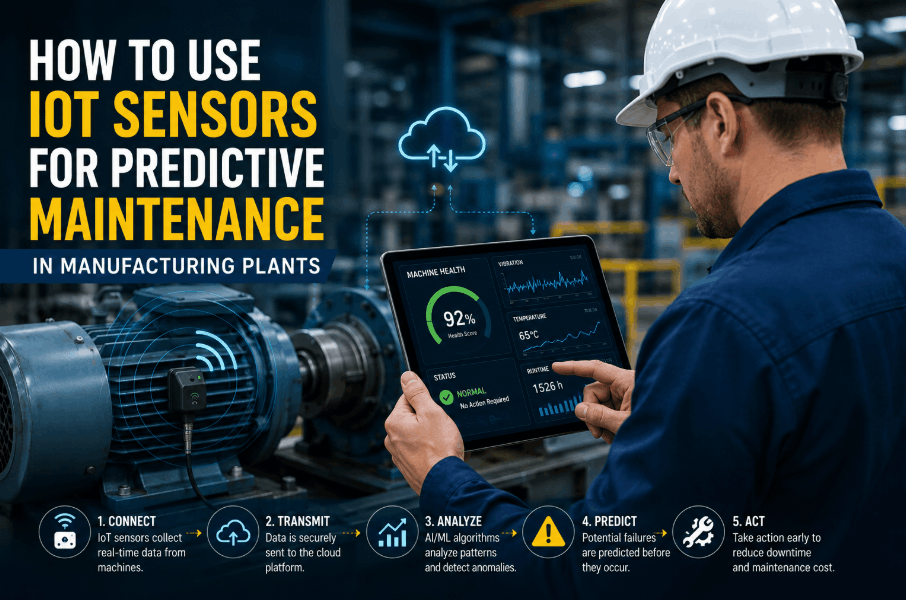
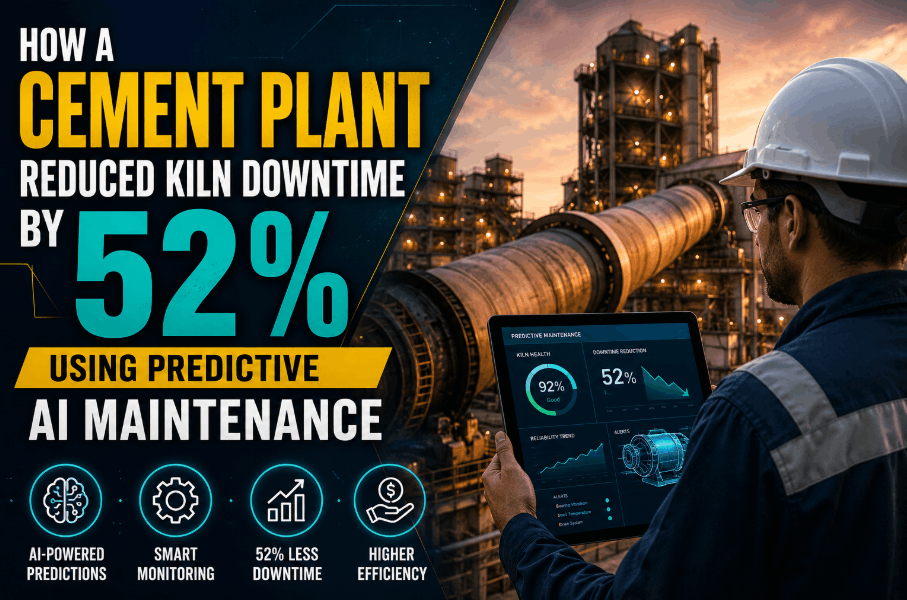
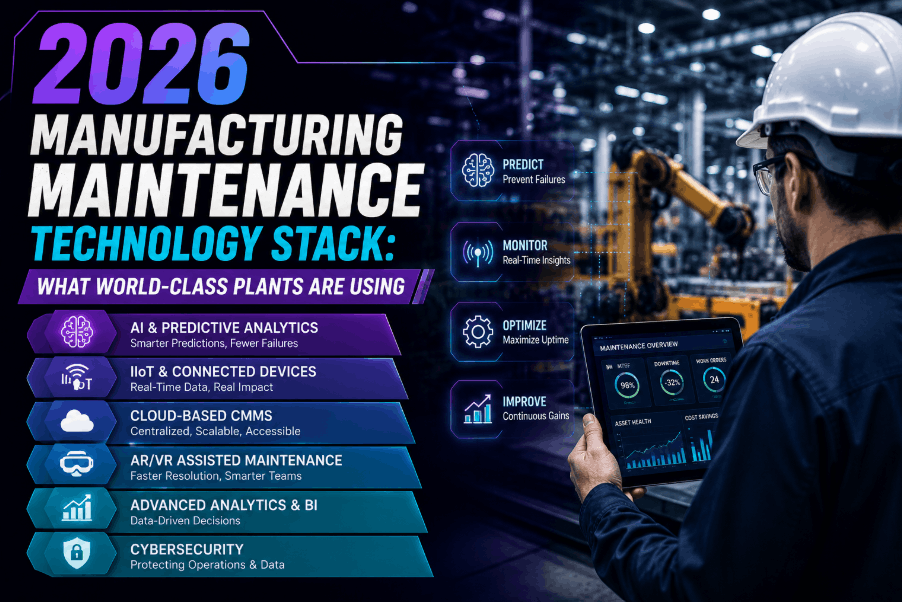
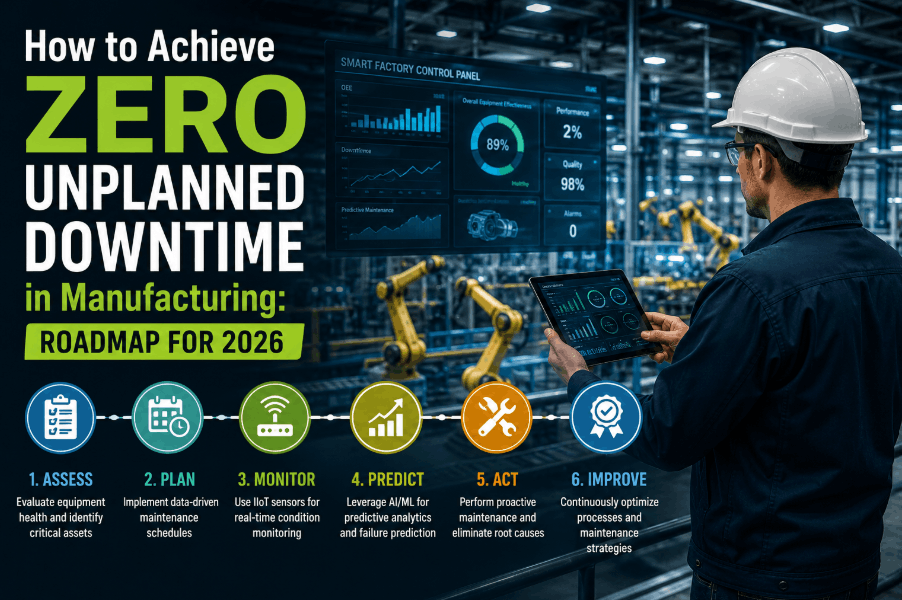
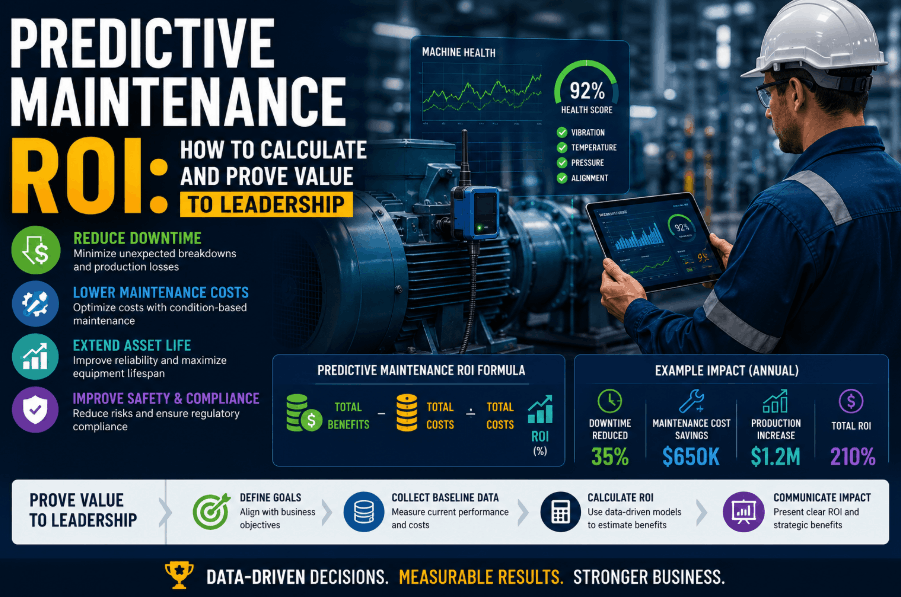
Manufacturing plants running without IoT-enabled predictive maintenance are flying blind. Equipment failures don't announce themselves — they build through vibration spikes, thermal drift, and pressure anomalies that conventional inspection cycles miss entirely. IoT sensors for predictive maintenance change that equation by converting physical machine behavior into continuous digital signals, giving maintenance teams the lead time needed to act before a breakdown occurs. Sign Up Free and connect your first IoT-monitored asset to Oxmaint's predictive maintenance platform today.
IoT-Powered Predictive Maintenance
Your Machines Are Sending Failure Signals Right Now — Is Anyone Receiving Them?
Oxmaint integrates with IoT sensors and PLC systems to turn real-time machine data into automated maintenance alerts, work orders, and predictive PM schedules — built for manufacturing plants that can't afford reactive maintenance.
Why IoT Sensors Are the Foundation of Modern Predictive Maintenance
From Scheduled Checks to Continuous Condition Intelligence
Traditional time-based maintenance schedules treat all equipment identically regardless of actual operating conditions. A motor running at 40% load under controlled temperature doesn't need the same service interval as one operating at peak load in a high-heat environment — yet most plants maintain both on identical PM cycles. IoT condition monitoring eliminates this guesswork by measuring real asset health in real time. Book a Demo to see how Oxmaint maps live sensor feeds to asset records and generates maintenance triggers automatically when parameters breach defined thresholds.
70%
of equipment failures are detectable days or weeks in advance with continuous IoT monitoring
25%
average reduction in maintenance costs reported by plants using IoT-based predictive programs
3–5×
ROI delivered by predictive maintenance programs versus reactive maintenance operations
IoT Sensor Types Used in Manufacturing Predictive Maintenance
Matching Sensor Technology to Failure Modes
01
Vibration Sensors
Accelerometers and piezoelectric sensors detect imbalance, misalignment, looseness, and bearing degradation in rotating machinery. Vibration signatures change weeks before mechanical failure occurs — making these the highest-value sensor type for motors, pumps, fans, and compressors.
Best for: Motors, pumps, gearboxes, compressors, rotating shafts
02
Temperature Sensors
Thermocouples, RTDs, and infrared sensors track heat buildup in bearings, electrical panels, motors, and process equipment. Abnormal temperature rise is a leading precursor to both mechanical and electrical failure events across virtually all asset classes.
Best for: Bearings, electrical cabinets, hydraulic systems, conveyor drives
03
Pressure Sensors
Pressure transducers monitor hydraulic circuits, pneumatic systems, and process pipelines. Gradual pressure drops signal developing leaks, valve wear, or pump degradation long before the system loses operational function or causes a safety incident.
Best for: Hydraulic presses, pneumatic lines, coolant systems, process piping
04
Current and Power Sensors
Current transformers and power quality monitors track motor load, voltage fluctuations, and harmonic distortion. Increased current draw on a pump or motor often indicates mechanical resistance — a detectable anomaly that precedes failure by days or weeks.
Best for: Electric motors, drives, compressors, CNC spindles
05
Ultrasonic Sensors
Ultrasonic detectors identify high-frequency sound emissions from developing bearing failures, compressed air leaks, and partial electrical discharge. They detect defects invisible to vibration analysis at early degradation stages — extending the detection window significantly.
Best for: Bearings at early failure stages, compressed air systems, electrical gear
06
Oil and Fluid Quality Sensors
In-line particle counters and fluid quality sensors monitor lubricant degradation, contamination, and wear debris in hydraulic and lubrication circuits. They shift oil analysis from periodic lab sampling to continuous real-time condition intelligence.
Best for: Hydraulic systems, gearboxes, compressors, lube circuits
07
Flow Sensors
Ultrasonic and electromagnetic flow meters monitor coolant, lubrication, and process fluid flow rates. Flow reduction below baseline indicates blockages, valve restrictions, or pump wear — all of which cause downstream equipment damage if left unaddressed.
Best for: Cooling circuits, lubrication systems, process fluid lines
08
Acoustic Emission Sensors
AE sensors detect stress wave energy released by crack propagation, corrosion, and material fatigue in structural components and pressure vessels. They provide early-stage structural integrity data that other sensor types cannot capture at comparable sensitivity.
Best for: Pressure vessels, structural welds, slow-speed bearings, gearboxes
Step-by-Step Guide: Implementing IoT Predictive Maintenance in Your Plant
How to Deploy IoT Sensors and Connect Them to a CMMS for Automated Maintenance Action
01
Identify Critical Assets and Their Dominant Failure Modes
Start with high-criticality, high-failure-frequency assets — not your entire plant. Review your CMMS work order history to identify which assets generate the most unplanned downtime and what failure modes are most common. These are your first IoT monitoring targets.
Sign Up Free to access Oxmaint's asset criticality ranking and failure history tools before sensor selection begins.
02
Select Sensor Types Based on Failure Physics
Match sensor technology to the physics of each failure mode. Vibration sensors for rotating assets. Temperature sensors for electrical and thermal failures. Pressure sensors for hydraulic and pneumatic circuits. Avoid deploying generic sensor kits — sensor-failure mode alignment is the primary determinant of prediction accuracy and lead time.
03
Choose the Right Connectivity Protocol for Your Plant Environment
Industrial environments have varying connectivity constraints. Wired sensors (4-20mA, Modbus, OPC-UA) suit high-noise environments with existing PLC infrastructure. Wireless options (WirelessHART, ISA100, LoRaWAN, Bluetooth) work for distributed or hard-to-wire assets. Oxmaint supports PLC and sensor data integration across standard industrial protocols —
Book a Demo to review your plant's connectivity architecture with our integration team.
04
Establish Baseline Operating Parameters for Each Asset
Before alerts can be meaningful, you need a baseline. Run monitored assets under normal operating conditions for 2–4 weeks and record sensor readings across representative load cycles. This baseline defines what "healthy" looks like for each asset — and sets the reference against which future deviation is measured.
05
Configure Alert Thresholds at Three Severity Levels
Set thresholds at three levels: Advisory (early warning, no immediate action), Warning (schedule maintenance within defined window), and Critical (immediate intervention required). Multi-level thresholds prevent alert fatigue — a single fixed threshold generates too many false positives that maintenance teams learn to ignore. Oxmaint's sensor integration maps each threshold level to a corresponding maintenance action or work order trigger automatically.
06
Integrate Sensor Data with Your CMMS for Automated Work Order Generation
Sensor data without maintenance action integration is just monitoring — not predictive maintenance. Connect your IoT sensor platform to Oxmaint to automatically generate condition-based work orders when thresholds are breached, assign them to the correct technician, and link the relevant spare parts to the work order before the technician reaches the asset.
Sign Up Free and connect your sensor platform to Oxmaint's CMMS in minutes.
07
Validate, Tune, and Expand Across Your Asset Register
Track prediction accuracy over the first 90 days: how many alerts correctly predicted a developing failure? How many were false positives? Use this data to refine thresholds, adjust sampling frequencies, and prioritize your next wave of sensor deployments. Effective IoT predictive maintenance programs expand iteratively — not all at once.
How Oxmaint Integrates IoT Sensor Data into Predictive Maintenance Workflows
From Raw Sensor Signal to Automated Maintenance Action
PLC and Sensor Integration
Oxmaint connects directly to PLC systems and industrial IoT sensors via standard protocols, pulling machine state, runtime hours, and condition data into asset records automatically — eliminating manual data entry from the maintenance workflow.
Condition-Based Work Order Triggers
When sensor readings breach defined thresholds, Oxmaint automatically generates and assigns a work order — with asset history, failure codes, and linked spare parts — giving technicians everything needed to act immediately.
Real-Time Asset Health Dashboard
Operations and maintenance leadership see live asset health status, active alerts, and condition trends across the entire plant floor from a single dashboard — with no manual data aggregation required.
Meter-Based PM Scheduling
Runtime hours, cycle counts, and production meters fed from IoT sources drive Oxmaint's meter-based PM schedules — ensuring maintenance intervals align with actual asset usage rather than calendar time.
Failure Pattern Analytics
Oxmaint analyzes sensor event history alongside work order records to surface recurring failure patterns — identifying which assets, shifts, or operating conditions produce the most predictive signals for proactive scheduling.
Mobile Technician Alerts
When a sensor threshold breach triggers a work order, the assigned technician receives a mobile notification instantly — with asset location, sensor readings, historical context, and checklist — enabling fast, informed field response.
IoT Predictive Maintenance: Sensor Selection by Asset and Failure Type
Quick Reference for Manufacturing Maintenance Engineers
| Asset Type |
Primary Failure Mode |
Recommended Sensor |
Key Parameter |
Typical Alert Lead Time |
| Electric Motors |
Bearing wear / winding failure |
Vibration + Current |
RMS velocity, current draw |
2–6 weeks |
| Centrifugal Pumps |
Cavitation / impeller wear |
Vibration + Pressure |
Vibration spectrum, differential pressure |
1–4 weeks |
| Gearboxes |
Gear tooth wear / lubrication failure |
Vibration + Oil Quality |
High-frequency vibration, particle count |
3–8 weeks |
| Hydraulic Systems |
Seal degradation / contamination |
Pressure + Flow + Temperature |
System pressure, fluid temperature |
1–3 weeks |
| Compressors |
Valve failure / bearing wear |
Vibration + Temperature + Current |
Discharge temperature, vibration |
2–5 weeks |
| Electrical Panels |
Thermal failure / loose connections |
Temperature (infrared) |
Hot spot temperature delta |
Days–weeks |
| Conveyor Drives |
Belt tension / bearing failure |
Vibration + Temperature |
Drive bearing vibration, motor temp |
1–4 weeks |
The table above reflects sensor-failure mode alignment used in industrial predictive maintenance deployments across automotive, food and beverage, pharmaceutical, and heavy manufacturing environments. Book a Demo to map this framework against your specific asset register in Oxmaint and identify which sensor deployments will deliver the fastest failure detection ROI in your plant.
CMMS + IoT Integration for Manufacturing
Ready to Connect Your IoT Sensors to Automated Maintenance Action?
Oxmaint integrates with industrial IoT sensors and PLC systems to automatically generate condition-based work orders, track asset health, and eliminate reactive maintenance from your plant operations.
Frequently Asked Questions: IoT Sensors for Predictive Maintenance
What types of IoT sensors are most effective for predictive maintenance in manufacturing?
Vibration and temperature sensors deliver the broadest predictive coverage across manufacturing assets — detecting bearing failures, misalignment, thermal anomalies, and electrical faults weeks before breakdown. Pressure and current sensors add coverage for hydraulic systems and motor-driven equipment respectively.
How does Oxmaint integrate with IoT sensors and PLC systems?
Oxmaint connects to PLC systems and IoT gateways via standard industrial protocols, pulling runtime data, machine state, and sensor readings directly into asset records. Threshold breaches automatically generate and assign work orders in the CMMS without manual intervention.
How long does it take to see results from an IoT predictive maintenance program?
Most facilities detect their first actionable failure prediction within 30–60 days of sensor deployment and baseline establishment. Measurable reductions in unplanned downtime are typically validated within 90 days of full CMMS integration and threshold configuration.
What is the difference between condition monitoring and predictive maintenance?
Condition monitoring collects and displays sensor data. Predictive maintenance converts that data into scheduled maintenance action before failure occurs. The difference lies in integration — Oxmaint closes the loop by turning sensor alerts into work orders, technician assignments, and parts availability checks automatically.
Do I need to replace existing equipment to use IoT predictive maintenance?
No. Retrofit IoT sensors attach to existing equipment without modification in most cases. Wireless vibration, temperature, and current sensors can be installed on motors, pumps, and gearboxes in under an hour — making IoT adoption practical for plants with established asset bases.
How do I set the right alert thresholds for IoT sensors?
Establish a 2–4 week operational baseline under normal conditions first, then set three-tier thresholds: advisory, warning, and critical. Oxmaint maps each tier to a corresponding maintenance response — from scheduled inspection to immediate work order generation — reducing alert fatigue and improving response accuracy.
Predictive Maintenance Platform for Manufacturers
Stop Reacting to Failures. Start Predicting Them.
Oxmaint connects IoT sensor data, PLC signals, and CMMS workflows into one platform — so your maintenance team acts on machine intelligence, not machine breakdowns.