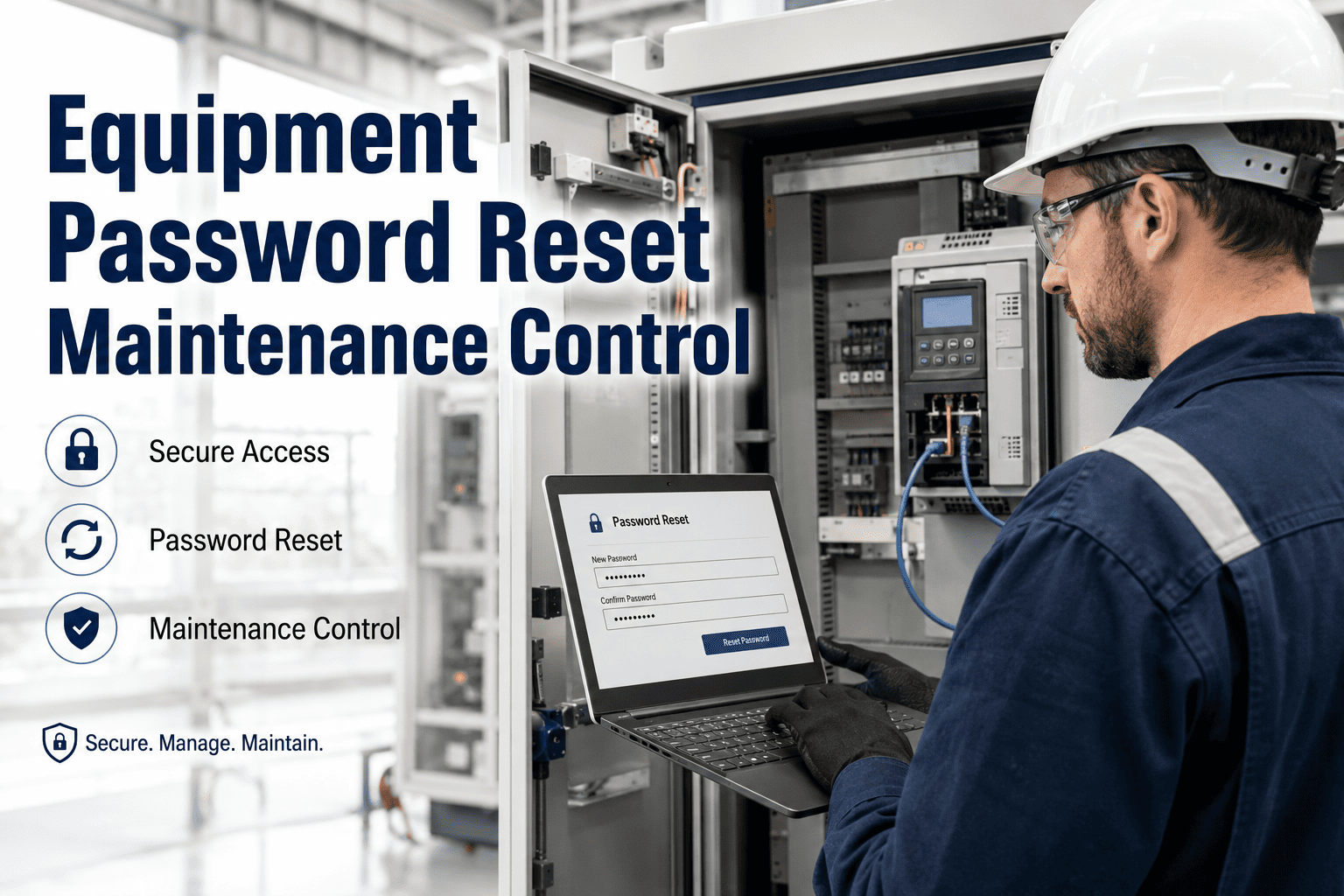
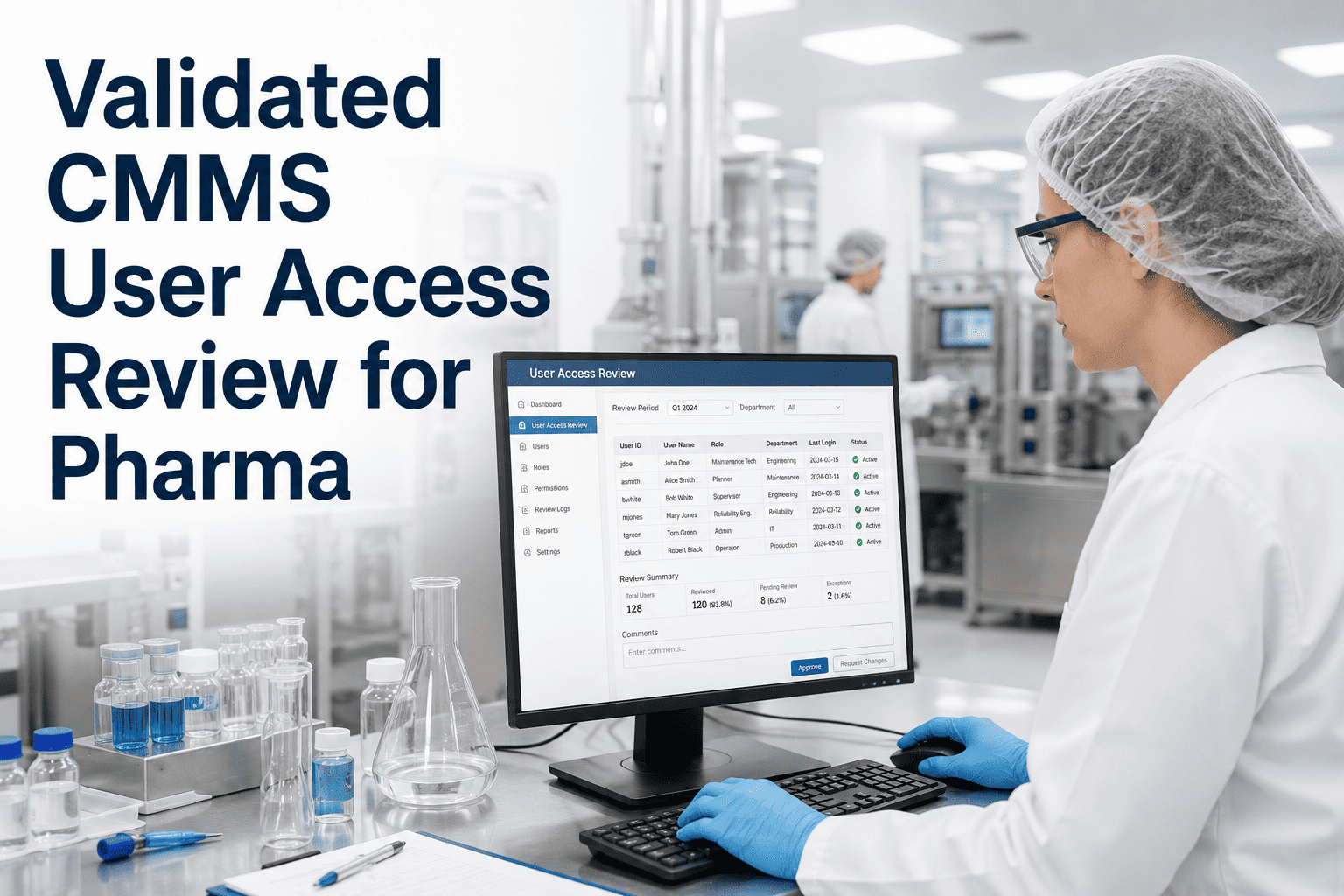
An undocumented equipment password reset in a GMP environment is not a minor IT oversight — it is a data integrity event. Under 21 CFR Part 11 and EU Annex 11, every access credential change on a computerized system in a GMP area must be traceable: who requested it, who approved it, why it was needed, and when it happened. Yet in most pharmaceutical plants, equipment password resets happen informally — a vendor asks an engineer for the admin password, an operator forgets their PIN and gets it reset by a supervisor over the phone, or IT applies a global password policy change across manufacturing equipment without a formal change request. Each of these events, if unlogged, is a potential 483 observation and a gap in the equipment's audit trail that could surface during a product deviation investigation. This blog explains how to design a formal equipment password reset control process — with approvals, reason codes, user logs, and audit evidence — that closes this compliance gap without creating an operational burden. Book a demo with Oxmaint to see how password reset workflows are built natively into the CMMS for GMP manufacturing areas.
Cybersecurity
GMP Compliance
Access Control
Equipment Password Reset Maintenance Control
Why every credential change on GMP equipment needs a formal request, a reason code, an approval trail — and how to build that process without slowing down maintenance teams.
Common Password Reset Scenarios — Compliance Risk
Vendor remote reset (undocumented)
Critical
IT bulk password policy change
Critical
Operator reset via supervisor verbal approval
Major
Admin access shared during shift change
Major
Validated process per SOP with full audit trail
Compliant
The Compliance Case
Why Password Resets Become Regulatory Findings
A password reset on a GMP-critical instrument or controller is a change to the system's access control state. Under the FDA's data integrity framework, any change to a computerized system that could affect its ability to create, modify, or delete GMP records must be documented in the audit trail and authorized through the site's change control system. The informal nature of most password reset practices — combined with the operational urgency that often drives them — creates a structural compliance gap that only formal process design can close.
483
Observation: "Firm unable to demonstrate that access credential changes to computerized systems in GMP areas were reviewed, approved, or documented"
WL
Warning Letter: "Systems did not have controls to prevent or detect unauthorized access, including undocumented credential resets by third-party service personnel"
Process Design
The 5-Element Password Reset Control Framework
1
Formal Request with Reason Code
Every password reset must begin with a formal request in the CMMS — not a verbal request or help desk ticket. The request must include a mandatory reason code from a controlled list: Forgotten Credential, Vendor Access Required, Periodic Rotation, Security Incident Response, or New User Setup. The reason code determines the approval path and the post-reset validation requirement.
2
Two-Stage Approval Before Reset
The reset request must be approved by the equipment owner (typically the production or engineering supervisor) and by the QA or system owner before the password is changed. For high-risk assets (SCADA, DCS, batch systems), a third approval from IT Security may be required. No reset should proceed without both approvals documented electronically.
3
Timed Access for Vendor/Contractor Resets
When a password reset is performed to grant vendor access, the account or temporary credential must have a defined expiry — typically the duration of the service event plus 24 hours. The CMMS should automatically trigger a follow-up task to verify credential revocation after the vendor session closes. Indefinite vendor credentials are a critical compliance risk.
4
Audit Evidence: Timestamped User Log
The CMMS must record: who initiated the reset, who approved it, the timestamp of the reset, the reason code, and the new credential state (expired, active, temporary). This log entry must be immutable — no user, including administrators, should be able to modify or delete it. The log becomes the audit evidence if the event is reviewed during an inspection.
5
Post-Reset Validation Impact Check
For any validated system, the reset workflow must include an assessment step: does this credential change affect the validated state of the system? If a password change alters the access control matrix described in the system's validation documentation, a validation change notice may be required before the system is returned to GMP use.
Reference Table
Password Reset Reason Codes and Required Actions
| Reason Code |
Approval Required |
Timed Access |
Validation Impact Check |
Audit Trail Entry |
| Forgotten Credential |
Supervisor + QA |
No |
Required |
Mandatory |
| Vendor/Contractor Access |
EO + QA + IT Security |
Yes — session duration |
Required |
Mandatory |
| Periodic Rotation (scheduled) |
Pre-approved via SOP |
No |
Low risk — document only |
Mandatory |
| Security Incident Response |
IT Security + QA |
No |
Required + CAPA |
Mandatory + Incident log |
| New User Setup |
Supervisor + QA |
Temporary first-login |
Low risk — document only |
Mandatory |
Scroll horizontally on smaller screens
Build password reset workflows directly into Oxmaint CMMS
Reason codes, dual approvals, timed vendor access, and immutable audit trail entries — all managed within the same validated CMMS that runs your maintenance programme.
Expert Review
GxP Compliance Specialist — Pharmaceutical & Biotech Manufacturing
"Password reset governance is one of those areas where the operational habit and the compliance requirement are in direct tension. The maintenance team wants to fix the problem and get the equipment running — the last thing they want is a three-step approval process. The way to resolve that tension is not to make the process easier to skip — it is to make the compliant process fast enough that it doesn't feel like a barrier. A CMMS-based workflow that completes a dual approval in under two minutes with a mobile approval button eliminates the 'I'll document it later' problem entirely."
41%
of data integrity findings in FDA inspections involve access control events with incomplete documentation
Under 2 min
Time to complete a CMMS-managed password reset approval when workflow is properly configured
FAQ
Frequently Asked Questions
Do equipment password resets fall under 21 CFR Part 11?
Yes, if the equipment is a computerized system used to create, modify, maintain, archive, retrieve, or transmit electronic records in GMP operations. Part 11 §11.10(d) requires that access to the system is limited to authorized individuals, and §11.10(k) requires that audit trails capture operator actions. A credential change that could affect the integrity of the access control system is a Part 11-relevant event and must be documented.
Oxmaint's audit trail captures every access change event automatically with the required timestamped, attributable record.
How should sites handle emergency password resets when approval delays aren't operationally feasible?
Sites should define a documented emergency reset procedure in their SOP — typically allowing a single authorized approver (QA on-call or plant director) to authorize a reset in urgent situations, with the requirement that the standard dual-approval documentation is completed within 24 hours as a retrospective record. The key is that the emergency procedure is itself documented, controlled, and triggered by a defined condition — not used as a standard workaround. All emergency resets require an investigation to determine if a CAPA is needed.
Book a demo to see how Oxmaint handles emergency workflow escalations.
Should vendor remote access resets be handled differently from internal resets?
Vendor resets carry higher regulatory risk than internal resets because they involve parties outside the site's direct supervision, often involve temporary elevated access, and are more likely to be undocumented in the absence of a formal process. Sites should require that any vendor password reset or credential creation is pre-authorized in the maintenance work order for the service event, time-limited to the service window, and verified as revoked after the session ends. The CMMS work order provides the audit anchor for the entire vendor access lifecycle.
Oxmaint links vendor access records directly to the service work order for complete traceability.
What is the difference between a password reset and a password rotation, and does it affect the compliance requirement?
A password rotation is a scheduled, planned credential update performed as part of a periodic security maintenance programme — typically pre-authorized through the site SOP and executed by IT on a defined schedule. A password reset is an unplanned credential change triggered by an event (forgotten password, security incident, vendor access request). Both require audit trail entries and documentation, but a rotation can operate under a pre-approved standing change while a reset requires individual change control authorization. The distinction matters for inspection purposes because the approval pathway and documentation requirements differ.
Close the password reset compliance gap — before the next inspection opens it
Oxmaint's CMMS builds formal approval, reason coding, timed vendor access, and immutable audit trail entries into every equipment credential change — turning a common 483 risk into a documented, governed process.