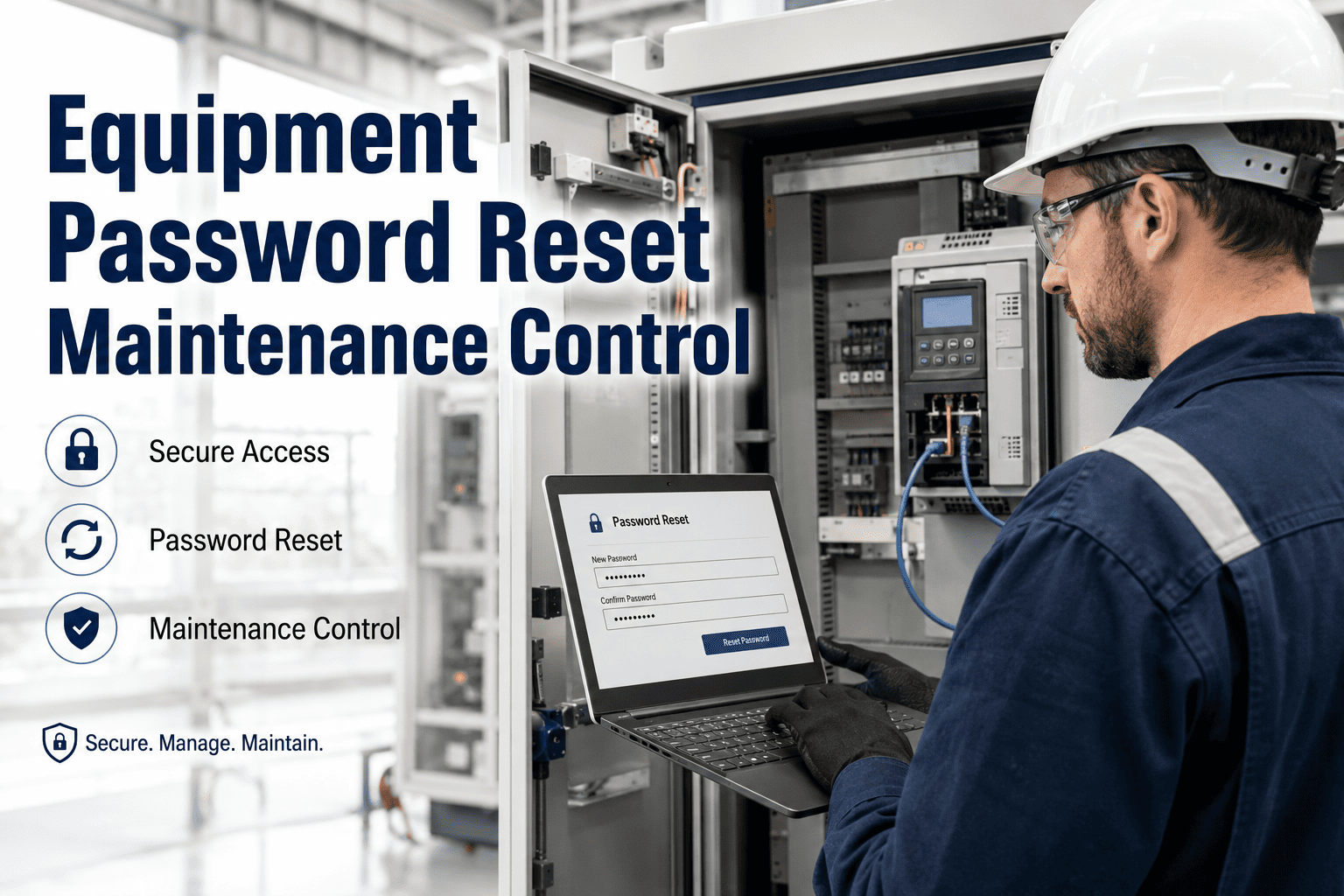
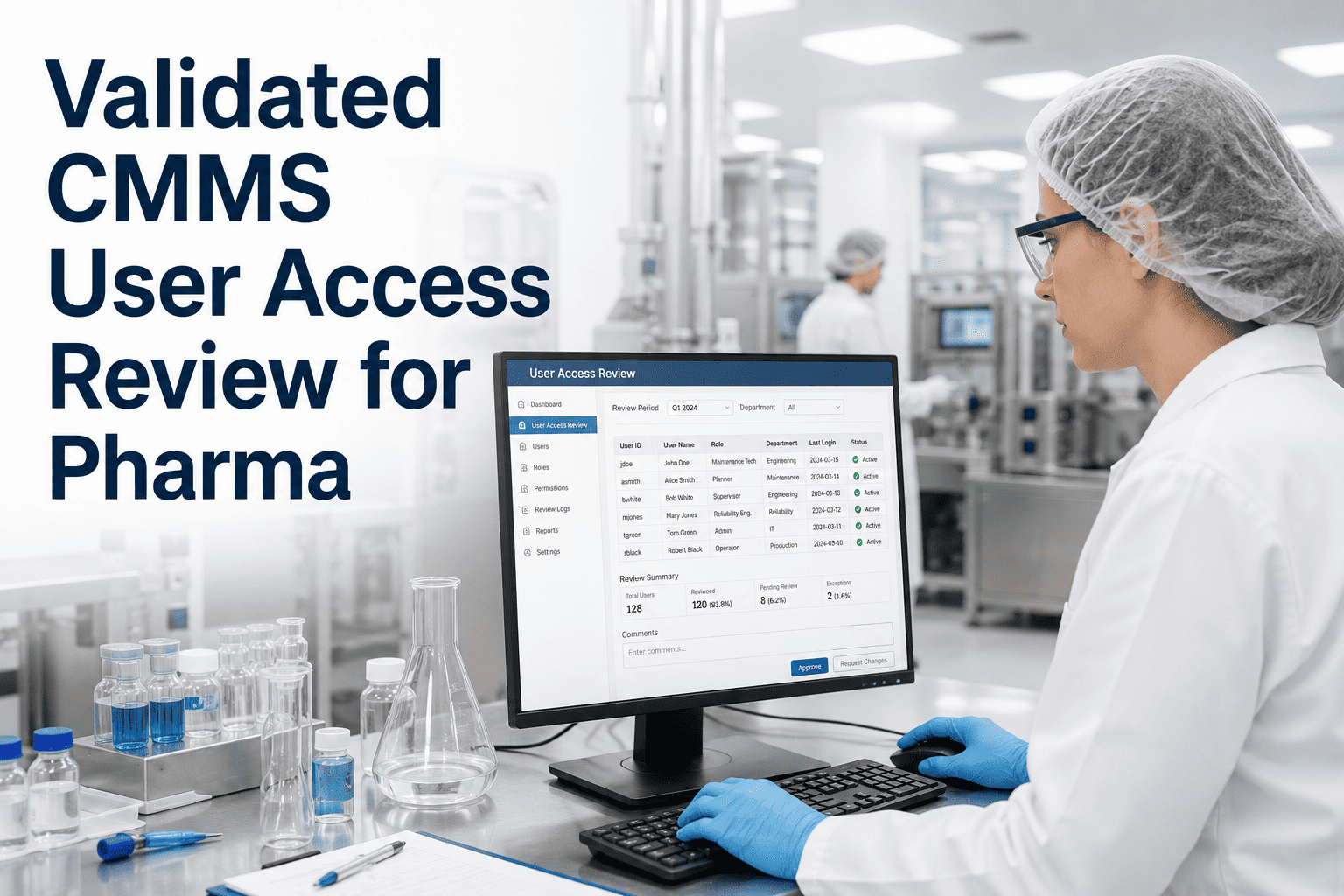
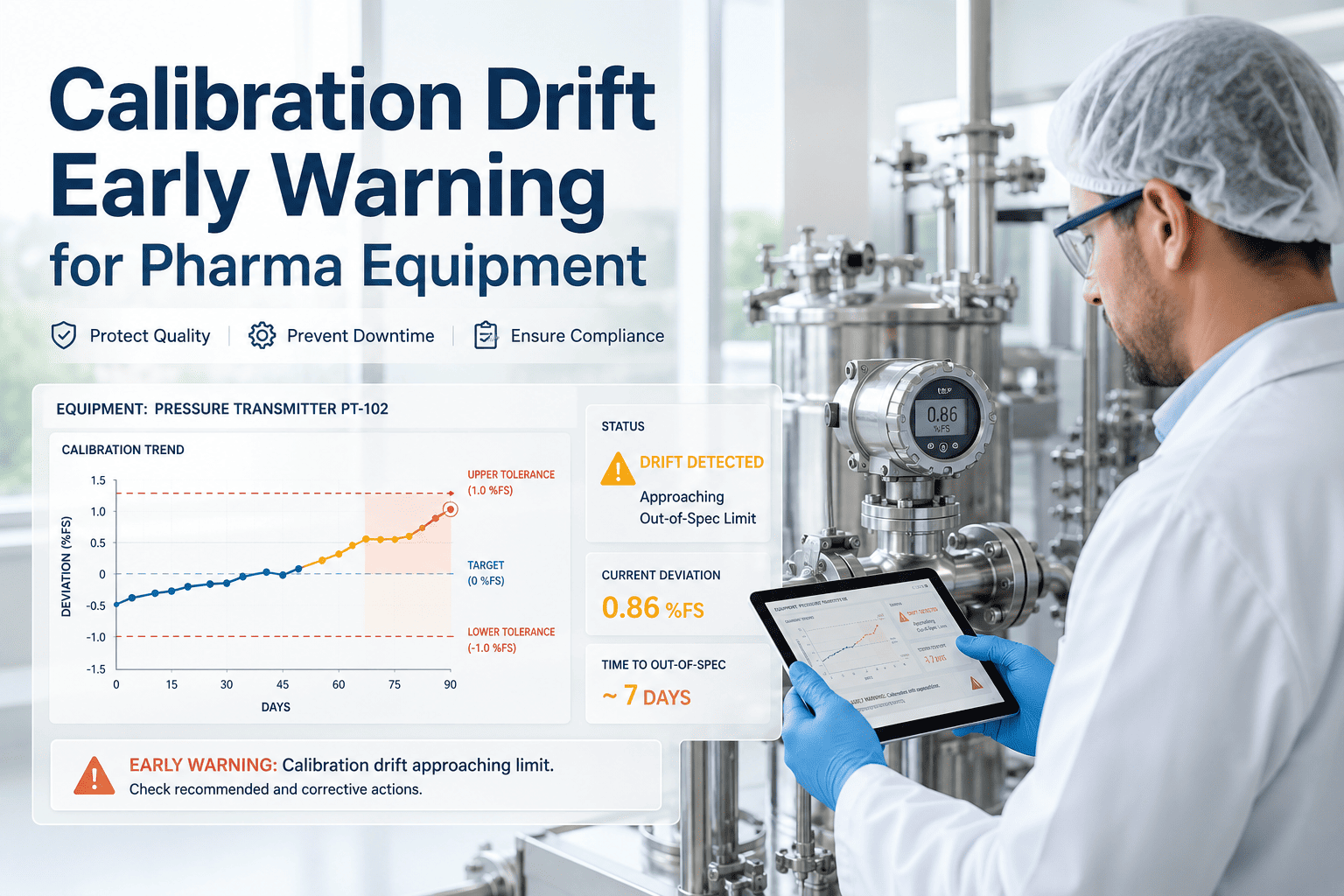
An OT (operational technology) asset inventory is the foundational requirement for every pharma cybersecurity programme — you cannot protect, patch, validate, or audit assets you don't know exist. In pharmaceutical manufacturing, OT assets span a wide range: PLCs controlling cleanroom pressure, HMIs on packaging lines, IP-connected sensors feeding batch records, skid-mounted controllers in utilities, and cameras tied to access control systems. As FDA cybersecurity guidance evolves and regulators explicitly begin requesting OT asset registers during facility inspections, the gap between "we have a list somewhere" and a structured, CMMS-linked OT asset inventory becomes a regulatory liability. This guide walks your maintenance and IT teams through building a complete OT asset register — from discovery methodology to classification, criticality scoring, and ongoing maintenance in a validated CMMS. Book a demo with Oxmaint to see how the asset hierarchy is built and kept current across multi-building and multi-site pharma operations.
OT Security
Pharma Guide
Asset Management
OT Maintenance Asset Inventory for Pharma
From PLCs to cameras — the complete guide to building, classifying, and maintaining an OT asset register for GMP manufacturing environments.
42%
of pharma OT assets are unaccounted for in existing IT asset databases
6–10x
More OT devices than IT devices at a typical mid-size pharma plant
FDA 2023
Cybersecurity guidance now expects an asset inventory for networked GMP systems
Why It Matters
The Hidden OT Asset Problem in Pharma Plants
Most pharmaceutical sites have three overlapping and inconsistent records: an IT asset database, a maintenance CMMS, and a validation master plan. None of these was designed to capture the full OT landscape — and critical assets routinely exist in none of them. The risk is not theoretical: uninventoried OT assets cannot receive firmware updates, cannot be included in change control, and cannot be assessed for cybersecurity vulnerabilities. During an FDA inspection, an investigator asking "show me the complete inventory of networked systems in this GMP area" should produce a single, accurate answer — not a three-department search.
Typical IT DB Coverage
35%
IT systems track servers and workstations — not PLCs, sensors, or skids
CMMS Coverage
58%
Maintenance records focus on mechanical assets — often miss embedded controllers
Validation Plan Coverage
71%
Covers validated systems but misses non-GxP OT assets with network connectivity
Target: Integrated OT Inventory
100%
All networked OT assets in one CMMS-linked register — the regulatory expectation
Asset Categories
OT Asset Classes to Inventory in Pharma Manufacturing
A complete OT inventory must span five distinct asset classes. Each has different discovery methods, criticality profiles, and maintenance requirements — and all require a record in the CMMS asset hierarchy.
PLCs (Siemens, Allen-Bradley, Schneider)
DCS controllers and I/O cards
RTUs on utility skids
Batch management servers
Safety instrumented system (SIS) controllers
High GMP Impact
HMI panels (shop floor and control room)
Operator workstations (embedded OS)
Thin client terminals
Mobile handheld devices (barcode, WO)
High GMP Impact
Networked temperature transmitters
Pressure and differential pressure sensors
Environmental monitoring nodes
Flow meters with Ethernet output
Cold chain data loggers
Medium GMP Impact
HVAC/BMS controllers
Chiller and compressor controllers
Pure steam generator controls
WFI / purified water system PLCs
Boiler and HVAC drive panels
Medium GMP Impact
IP CCTV cameras (GMP areas)
Electronic access control panels
Network switches (OT VLAN)
Firewalls and DMZ appliances
Supporting Infrastructure
Build Process
How to Build Your OT Asset Inventory: 4-Step Discovery Method
Step 1
Passive network discovery — map what's connected
Use passive network scanning tools (Claroty, Dragos, Nozomi) or work with your IT/OT team to capture every MAC address and IP on the OT network segments. This baseline discovery typically reveals 30–50% more networked devices than the maintenance team expected — particularly embedded controllers and sensors that were installed during commissioning and never formally documented.
Step 2
Physical walkdown and tag reconciliation
Assign maintenance technicians to walk every GMP area and utility room with a tablet running Oxmaint. For each networked device found: scan the asset tag if present, or create a new record. Capture make, model, serial number, location, IP address, firmware version visible on the device, and the GMP area classification it operates in. Physical walkdown typically adds another 15–20% of devices missed by passive scanning.
Step 3
Cross-reference with validation documentation
Pull the site's current validation master plan and review every validated system's user requirements specification for hardware components listed. Add any networked components not yet in the CMMS inventory. This step captures lab instruments, LIMS-connected analyzers, and other GxP-validated systems that maintenance teams don't routinely service but which carry significant regulatory exposure if their cyber status is not tracked.
Step 4
Classify, score criticality, and assign ownership in CMMS
For every asset now in the inventory: assign a GMP criticality tier (Direct / Indirect / Non-GxP), a cyber risk tier (High / Medium / Low based on network exposure and data sensitivity), a responsible maintenance owner, and a patch/firmware review frequency. Link the asset to the relevant preventive maintenance plan and change control process. This step transforms a list into a governed, maintainable register.
Inventory Template
Required Fields: OT Asset Inventory Record
| Field |
Example Value |
GMP Criticality |
Review Frequency |
| Asset Tag / Equipment ID |
EQ-PLN-2204-PLC01 |
Required — Direct GMP |
Each change event |
| Make / Model / Firmware |
Siemens S7-1500 / v2.9.3 |
Required — Direct GMP |
Quarterly |
| IP Address / MAC / VLAN |
10.40.12.45 / OT-Zone-B |
Required — Direct GMP |
Quarterly |
| GMP Area & Criticality Tier |
Packaging Line 4 / Direct |
Required — Direct GMP |
Each layout change |
| Cyber Risk Tier |
High (internet-reachable) |
Required — All networked |
Quarterly |
| Last Firmware Update Date |
2025-09-14 / Patch v2.9.4 |
Required — All networked |
Each patch event |
| Responsible Owner |
OT Engineering / J. Mehta |
Required — All assets |
Annual review |
| Linked PM Work Order |
PM-2024-1142 |
Recommended |
Per PM schedule |
Scroll horizontally on smaller screens
Build your complete OT inventory in Oxmaint — one platform for all assets
From PLC to camera, Oxmaint's asset hierarchy supports every OT device class with the criticality fields, firmware tracking, and audit trail your compliance team needs.
Expert Review
OT Security Architect — Pharmaceutical & Life Sciences
"The number one question I get from pharma maintenance directors is 'how do we know if we've found everything?' The honest answer is that you never achieve 100% certainty from passive scanning alone — but the combination of network discovery, physical walkdown, and validation document cross-reference gets you to 95%+, and that's defensible under inspection. What's not defensible is starting your OT inventory project the week before a PAI. It needs to be a living register in your CMMS, reviewed quarterly, with an owner who is accountable for keeping it current."
95%+
Asset discovery coverage achievable with combined walkdown + passive network scan method
2–4 weeks
Typical time to complete an initial OT inventory for a mid-size single-site pharma plant
FAQ
Frequently Asked Questions
What is the difference between an IT asset inventory and an OT asset inventory for pharma?
An IT asset inventory covers standard computing hardware — servers, workstations, laptops, and network infrastructure. An OT asset inventory covers operational technology: PLCs, HMIs, sensors, skid controllers, and any embedded computing device that directly interacts with or monitors a physical process. In a pharmaceutical plant, OT assets typically outnumber IT assets by 6 to 10 times and carry additional regulatory requirements because many of them directly affect GMP data or product quality.
Oxmaint's CMMS supports both IT and OT asset classes in a single hierarchy, with GMP-specific fields for criticality and validation status.
Does FDA explicitly require an OT asset inventory?
FDA's 2023 cybersecurity guidance for pharmaceutical manufacturers and the broader expectations under 21 CFR 211.68 for computer system controls make an OT asset inventory an implied regulatory requirement for any networked GMP system. While the regulation does not use the term "OT inventory" explicitly, the expectation that a site can identify, control, and audit every networked system in a GMP area creates the functional requirement. Inspectors are increasingly requesting this documentation during PAIs and routine surveillance inspections.
Book a demo to see how Oxmaint structures the OT inventory to meet this expectation.
How should OT assets be classified for GMP criticality?
The standard approach is a three-tier classification aligned with ISPE GAMP 5 and the site's validation master plan: Direct Impact (systems that directly control or monitor a GMP process and whose failure could affect product quality or data integrity), Indirect Impact (systems that support GMP operations but do not directly affect the product), and No Impact or Non-GxP (systems with no connection to GMP operations). Every OT asset must be assigned a criticality tier as part of the inventory build — and that classification must be periodically reviewed when the asset's role changes.
How often should the OT asset inventory be updated and reviewed?
The inventory should be updated continuously through change control — any new networked device installed in a GMP area should have an inventory record created before it goes live. In addition, a formal review of the complete inventory should be conducted at minimum annually, or after any major capital project, facility modification, or network architecture change. High-risk OT assets (SCADA, DCS, batch servers) should be reviewed quarterly for firmware currency.
Oxmaint automates review scheduling and sends alerts when firmware review dates are approaching so nothing falls through the cracks.
Start with a complete OT inventory — and maintain it automatically in Oxmaint
One CMMS for all your OT assets — PLCs, HMIs, sensors, skids, cameras, and utilities — with criticality classification, firmware tracking, and audit-ready records for every inspection.